- Expand the coverage from the current 1.9 million children to universal coverage by 2030.
- Develop a national policy on school meals by June 2023.
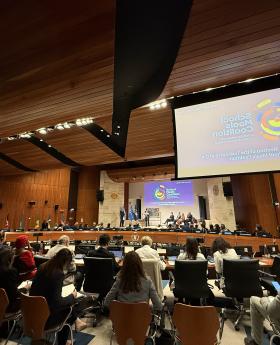
- Establish a national school meals coalition and hold annual school meals stakeholder conferences with the aim of strengthening national coordination of the programme.
- Roll out a digitalized school meals data and reporting module within the National Education Management Information System by December 2023.
- Work with multiple stakeholders to introduce green technologies that provide clean energy solutions to support safe food preparation.
- Encourage school gardens through the re- established 4-k clubs for introduction of healthy diets and for the sustainability of the school meals programme.
Kenya
National Commitments
Commitment submitted on
Declaration signed by
the Ministry of Education
National Progress Reports
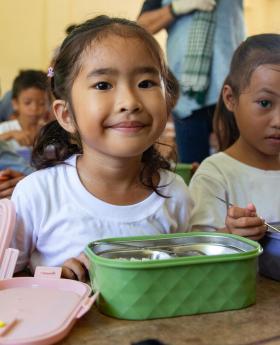
- Increased school meals coverage from 1.9 million to 2.6 million children, aiming for universal access by 2030.
- Launched a National School Meals Coalition with over 100 partners and six Technical Working Groups.
- Piloting clean cooking technologies and school gardens; supporting smallholder farmers through aggregator models.
Programme Design and Coverage
- Kenya has expanded its national school meals programme from 1.9 million children in 2023 to more than 3.2 million in 2026, with a goal of universal coverage by 2030.
- Kenya is advancing innovations to improve the quality and sustainability of school meals. Pilot initiatives are strengthening links between schools and smallholder farmers through aggregator models, clean cooking solutions, school gardens and 4-K Clubs (“Kuungana, Kufanya, Kusaidia Kenya” or “Join together, to act, to help Kenya”) are helping create stronger links between school meals, nutrition, local food production and environmental sustainability. Progress is also being made to integrate school meals into the Kenya Education Management Information System (KEMIS) to enhance monitoring, reporting and planning.
Policy
- The National School Meals Policy was approved in 2026 following extensive stakeholder consultations, strengthening the framework for implementation and institutionalization of school meals. Kenya also completed a Sustainable Financing Strategy study to identify pathways for programme expansion and sustainability in the long term.
Governance and Coordination
- Kenya established the National Chapter of the School Meals Coalition, the country's first multi-stakeholder platform dedicated to school meals. In its first year, the Chapter drove progress on policy, financing, partner coordination, local food procurement, clean cooking and inclusion, helping align stakeholders behind the national scale-up agenda.
Next steps
- To advance implementation and sustainable financing, the National Chapter has established a committee to assess and recommend sustainable financing options such as blended finance, domestic resource mobilization, climate finance, private sector engagement and other innovative mechanisms.
- A national School Meals Programme Summit is planned to position school meals as an investment in human capital and sustainable development, align stakeholders and mobilize resources towards the goal of reaching 10 million children.
- The National Chapter will continue mapping partners and strengthening reporting through the national coordination mechanism to improve visibility of coverage, resources and gaps, while enhancing transparency, accountability and collective action.