
By Tsitsi Matope
The Republic of Korea (RoK) is now a member of the School Meals Coalition and views this as a significant opportunity to enhance international partnerships. The government is eager to leverage its extensive expertise in school meal programmes to contribute meaningfully to global initiatives aimed at improving child nutrition and education.
Honourable Kim Choon-jin, a former member of parliament who initiated the universal free school meal policy in Korea, has emphasized the government’s commitment to sharing knowledge and best practices while learning from other countries. “This is so important because school meals are a crucial educational activity that helps children develop healthy eating habits and practices that will benefit them throughout their lives. These programmes are also supporting children to understand the importance of sustainable agricultural practices and appreciate efforts to mainstream climate action in school meal programmes,” said Hon. Kim Choon-Jin who is currently the chief executive officer at the Korea Agro-Fisheries and Food Trade Corporation (‘aT').
The Republic of Korea provides nutritious meals to five million students in almost 12,000 primary and secondary schools across the country, supporting 99.8% of the children in public and private schools. Hon. Kim Chhon-Jin said global partnerships have become more important as countries battle multiple crises such as hunger, child malnutrition and climate change, among others. “It is imperative that we collaborate as the global community to make school meal systems work much better. Efficient school meal programmes contribute to addressing these global challenges,” he said and adds: “It is our indeed our hope that the partnerships we envision will have a positive impact on improving school food management systems across the world, and we would like to emphasise delivering high-quality and safe school food as well as creating better food industry policies.”
In the Republic of Korea, the School Meal Programme has grown rapidly over the past 70 years, starting with the distribution of donated milk powder to elementary school pupils in 1953 when the country was facing a severe food crisis after the Korean War. Today, the government is delivering a nutrition-centred programme providing free school meals to all primary and secondary school students. Nutrition is a top priority, as demonstrated by placing nutrition experts in all schools with a task to instil in students healthy eating habits and demonstrating this through meals they receive at school. According to Hon. Kim Choon-Jin, a unique aspect of the programme is the government's participation in the entire school meals value chain. The presence of the government is felt from its partnerships with the local farmers supplying food, in storage arrangements and processing of food at School Food Centres. These centres are in each municipality and ensure the provision of safe and high-quality meals to schools, managing all stages of food trading and distribution online through integrated public food platform called ‘Electronic Agriculture Trade ('eaT’)'. 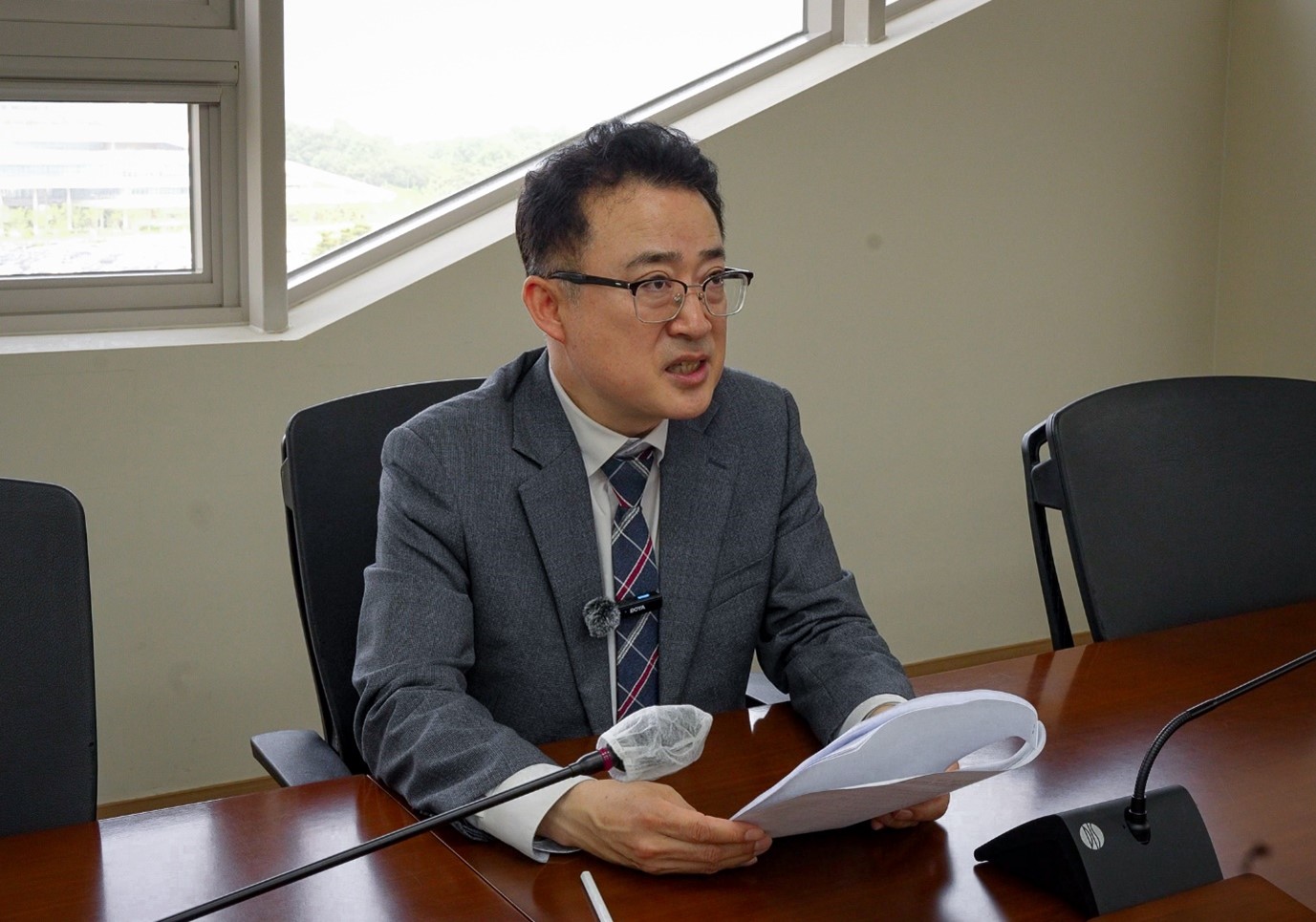
Measures by the government are ensuring that students are provided with both local and planet-friendly meals. Hon. Kim Choon-jin said the Republic of Korea joins the School Meals Coalition at a time when they are working with various partners in promoting low-carbon diets that foster sustainable dietary programmes that lower greenhouse emissions and improve health. Late last year, the Korea Agro-Fisheries and Food Trade Corp launched the ‘Low-carbon Diet Campaign Forum’ to facilitate partnerships among over 680 organisations in 45 countries. “The campaign is working hard to reduce greenhouse gas emissions from the entire food chain by promoting meals made with low-carbon ingredients and minimizing food waste during processing and consumption. We took an interest in joining the School Meal Coalition, with the goal of providing healthy and nutritious school meals, and for the Coalition to play a crucial role in growing this campaign,” said Hon. Kim Choon-Jin.
On his part, Mr. Kim Dongro (pictured), who is the Senior Deputy Director for Student Health Policy in the Ministry of Education, said the government will share some insights on the crucial role that free school meals play in guaranteeing that economic inequalities do not translate into disparities in educational opportunities as well as depriving children a chance to becoming healthier and more productive adults. “Looking ahead, we would like to improve nutrition and dietary education and strengthen personalized nutrition management services. We are focusing on this because, at the height of the COVID-19 pandemic, the consumption of ultra-processed and fast foods among adolescents significantly increased. This has created health concerns such as obesity, sedentary behaviour, and other diseases among children,” said Mr. Kim Dongro.
The first step will see the Republic of Korea increasing its investment in strengthening nutrition education that is integrated into the curriculum to develop healthy eating habits among students. Secondly, Mr. Kim Dongro said the government is considering offering customized school meals that can respond to the students’ health and nutrition needs to help address nutritional imbalances. “Improving hygiene management practices throughout the school meal supply chain is also a priority area,” he said, explaining that despite the implementation of the ‘Hazard Analysis and Critical Control Points (HACCP) system’ in all schools to ensure delivery of safe and healthy food, there is a need to improve prevention of food contamination from externally processed foods. The Ministry of Education has partnered with other ministries to strengthen food safety inspections during the production, distribution, and cooking processes in all schools, with the introduction of automated cooking robots expected to further reduce the workload on the cooks and improve efficiency.