
Document
School Meals at the 30th UN Climate Change Conference (COP30)
10–21 Nov 2025

Overview
The 30th UN Climate Conference (COP30) will convene government leaders, scientists, private sector, international financial institutions, civil society & youth to accelerate global action on climate. COP30 will be an “implementation COP” under Brazil’s presidency, presenting a key opportunity for members and partners of the School Meals Coalition to position school meals as a proven, scalable, climate-smart investment that delivers across nutrition, resilience and food systems transformation. Anchored in national ownership and guided by evidence, school meal programmes represent a practical and effective pathway to deliver on countries’ climate, food systems and sustainable development commitments, benefiting people and planet.

School Meals-related Events
Delivering for climate and biodiversity: lessons and evidence gaps from Brazil’s National School Feeding Program (PNAE)
12 November 18:30–19:30 Food and Agriculture Pavilion, Blue Zone
Brazil’s National School Feeding Program (PNAE) shows how food procurement can advance food security, rural development, and climate action. Experts, academia, government and civil society will explore PNAE’s economic and environmental impacts, its support for agroecology, local markets, and smallholder resilience.
Organizers: Alliance Bioversity International – CIAT, IFPRI, Instituto Comida do Amanhã; Federal University of Rio Grande do Sul; Rockefeller Foundation; FNDE-National Fund for Educational Development of Brazil and UNIFESSPA-Para
HYBRID - Video Livestream
Accelerate public policies to fight climate change, strengthen nutrition, and promote agroecological transition
13 November 09:30–10:30 Axis 3 Thematic Room
This session spotlights innovative solutions accelerating the implementation of public food policies, from school meals and food banks to family farming credit and inclusive food governance. Bringing together local and global perspectives, it explores how these initiatives can drive climate action, improve nutrition, and advance the agroecological transition.
Organizer: Alliance Bioversity International – CIAT
3rd Annual Meeting of the Greening Education Partnership
13 November 10:00 - 12:00 UNAMAZ booth, Green Zone
The event will highlight the GEP’s latest achievements—including the global dashboard and capacity-building programmes—and feature inspiring examples from across countries, with a focus on Brazil’s national initiatives and a school visit. Participants will also explore strategies to boost investment and coordinated action in greening education. Through this gathering, UNESCO and its partners aim to reaffirm education’s essential role in tackling the climate crisis and to strengthen collective commitment towards a sustainable, climate-smart future.
Organizer: Greening Education Partnership
Pulses in school meals – untapped climate potential
13 November 2025 - 15:30–16:30 Food and Agriculture Pavilion, Blue Zone
Integrating pulses into school meal programs can advance multiple COP30 Action Agenda priorities. Pulses improve soil health, diversify crops, and provide nutritious, affordable food—while supporting farmers and rural communities. This session will show how linking climate-smart agriculture with school meals drives resilience, nutrition, and sustainable development.
Organizers: Alliance Bioversity International – CIAT, Greenworks Inc
Powering Schools, Protecting Forests: Scaling Clean Cooking with Carbon Finance
14 November 10:00 - 12:00 Pavillion, SEforALL Forum Booth (Location TBC)
This event will highlight Tanzania's efforts in advancing clean cooking initiatives in schools as part of the implementation of the National Clean Cooking Strategy 2024-2034 and the Mission 300 National Energy compact. It will explore how partnership and innovative financing mechanisms can accelerate the transition to sustainable cooking solutions.
Organizers: United Republic of Tanzania in collaboration with the Word Food Programme and SEforAll
Building States with capacity to deliver a just and green transition
14 November 14:00 - 15:00 Action Room 5, Area B
Launch of joint report with Brazilian Minister of Management and Innovation in Public Services, State Capacity and Capabilities for a Just Green World addressing school meals
Organizers: UCL Institute for Innovation and Public Purpose, Brazilian Minister of Management in Public Services
Platform for Clean Cooking in Schools: Linking Food and Energy Systems
15 November 17:00 -18:00 Plenary
The event spotlights high-level commitments from governments and partners to integrate clean cooking into national school meals programmes and national energy plans. Showcasing multiple impact pathways, the Platform will generate momentum to ensure a just and inclusive food and energy transition.
Organizers: COP30 Presidency, High-Level Climate Champions, Sustainable Energy for All (SEforALL), World Food Programme (WFP), School Meals Coalition, the World Bank – ESMAP, UKAid Modern Energy Cooking Services (MECS), Government of Iceland, Forward7 – Middle East Green Initiative, Global Platform for Action (GPA), Lightrock.
School Meals: Food System Gamechanger Brazil & the Nordics: Climate-Smart Innovations for Nutritious School Food
19 November 14.00-14.45 Nordic Pavilion
School meals can do more than we think to facilitate a sustainable development. All around the world there is a rapidly growing interest in developing new as well as in rethinking existing school meal programs. Brazil and the Nordics are good examples. Integration of food & climate literacy training in the programs, a transition to more plant based diets, engagement of young people in innovation efforts and food waste reduction strategies are just some of the elements that are taken up. All efforts that make a contribution to climate mitigation and that are underlining the fact the school meal programs are increasingly recognized as levers of a transition to more just and climate friendly food systems. This is the point of departure for the session.
Organizers: Copenhagen University, Lund University & Federal University of Rio de Janeiro
Plant-Forward School Meals for Better Climate and Nutrition Outcomes
20 November 9:30-10:40 Green Room at the Action on Food Hub
In this session, the Bread for the world will invite partners to discuss the potential of more plant-forward diets to be a climate-smart solution for both sustainable agriculture and nutritious school meal programs. Pulses naturally enrich soils and lower greenhouse gas emissions while thriving in challenging environments, offering farmers lower production costs and greater resilience, and creating opportunities for land restoration. Facilitating markets for plant-forward diets through public procurement and school meals creates stable markets for smallholder farmers, supports rural livelihoods, and strengthens local food systems. Integrating sufficient plant-based options into school meals bridges climate action with child nutrition, providing a scalable strategy for achieving food security, climate resilience, and rural development.
Organizers: Bread for the World - Participants: Bread for the World, Rockefeller Foundation, World Food Programme, School Meals Coalition, Bush’s Beans
Overcoming Obstacles to School Meal Implementation: Building Resilience, Finance, and Coordination
20 November 10:45 - 11:45 Green Room at the Action on Food Hub
This panel session will highlight how school meals implementation is affected by climate change and identify common challenges (e.g. finance, technical knowledge, or program coordination) while showcasing best practices to overcome them. The panel will feature experts in school meals implementation and policy to identify innovative solutions to the common climate challenges that school meals programs around the world are facing relative to climate change.
Organizers: Bread for the World. Speakers: World Vision, Global Child Nutrition Foundation, One Acre Fund, International Fund for Agricultural Development
One Meal, Many Solutions: Advancing Regenerative School Meals for People and Planet
20 November 11:00 – 12:00 Thematic Room 6
This high-level event will bring together governments, multilaterals, development finance institutions, and advocates to accelerate human-centered climate solutions like regenerative school meal programs. Country-led efforts that advance integrated development solutions are central to regenerating our food system and reducing emissions.
Organizers: The Rockefeller Foundation, The Sustainable Financing Initiative of the School Meals Coalition, Climate High-Level Champions
Roundtable: Advancing Healthy School Meals for Children Today and Tomorrow
20 November 12:00 - 13:00 Blue Room at the Action on Food Hub
This roundtable session will convene various private, public, and research organizations discussing how climate-friendly and nutritious school feeding programs can be scaled up in different contexts. The Roundtable will identify different initiatives, policy levers, and opportunities for making sustainable and nutritious school meals a priority for global leaders by identifying synergies in climate, biodiversity, trade, health, and global security priorities and compacts.
Organizers: Bread for the World Speakers: Comida Do Amanha, GreenFaith, World Vision
Financial Instruments Toolkit
COP30
Financial Instruments Toolkit
Financial Instruments Toolkit for Regenerative School Meals
As the world gears up for COP30 in Brazil, the need to develop strategies that benefit both climate and health outcomes, while also serving development and rural economic equity goals is more pressing than ever. The Rockefeller Foundation has recently launched a toolkit designed to assist governments and investors in financing regenerative agriculture and school meals concurrently. This toolkit utilizes funding from national budgets, climate funds, and private investors to create a comprehensive approach.
To global funders, this toolkit serves as a guide for making intelligent investments that address various priorities such as nutrition, education, agriculture, climate action, and fiscal stability. Through strategic alignment of financing mechanisms, governments and investors have the opportunity to transform school meals into a catalyst for regenerative agriculture, enhanced health results, and resilient food systems.
Related Content
Related Content

Belem Declaration on Hunger, Poverty, and Human-Centered Climate Action
The Belem Declaration on Hunger, Poverty, and Human-Centered Climate Action (COP30) commits countries to address climate impacts through inclusive strategies that safeguard food security and end hunger. It prioritizes climate-responsive social protection linked to nutrition and school feeding, support for small-scale food producers, and just transitions for vulnerable communities, backed by scaled climate finance.
Learn more about the Global Alliance Against Hunger and Poverty.
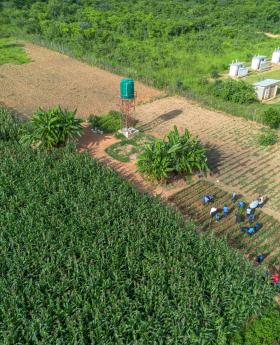

Climate Finance for Sustainable School Feeding: Exploring the Options
This report examines how climate finance can support sustainable school feeding programs. It explores various financing mechanisms, policy frameworks, and includes case studies from Brazil and Italy to assess how climate-related funds can enhance the sustainability and resilience of school feeding initiatives.

School Meals and Food Systems: Rethinking the consequences for climate, environment, biodiversity, and food sovereignty
This white paper explores how school meals can drive food systems transformation, focusing on nutrition, climate resilience, and sustainability. It emphasizes the integration of local agriculture, the reduction of food waste, and the promotion of healthier, planet-friendly diets in school programs. Various case studies demonstrate the effectiveness of these policies across diverse contexts.
Pastorino S, Bundy D, Springmann M, Burbano C. School Meals and Food Systems. Research Consortium for School Health and Nutrition; January 2024.
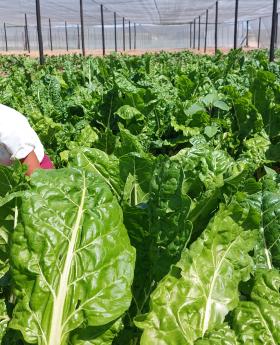

Investing in Future Generations: Human capital, sustainable food systems and climate change action through school meals
This report summarizes key outcomes from the School Meals Coalition Global Summit in Paris (2023), where countries and partners reaffirmed commitments to expanding school meal programmes. It highlights progress, new country pledges, financing strategies, and the role of school meals in education, nutrition, food systems, and climate action.