
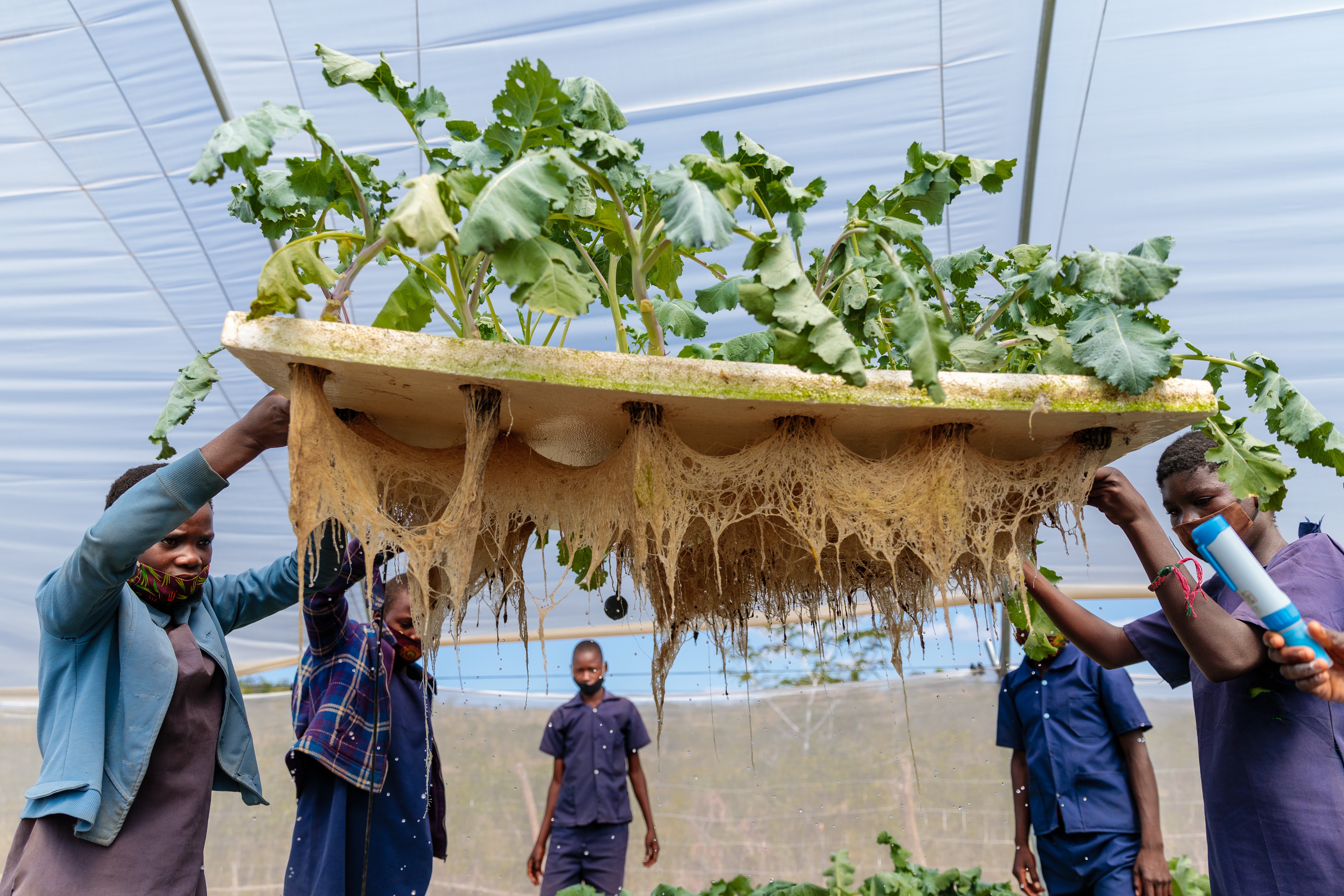
Learners at Gwembe primary school show the vegetables they are growing from their hydroponic school garden. Photo credit: WFP/Andy Higgins
By Chileshe Chilambwe and Nkole Mwape in Zambia
Students Abigail (14) and Penjani (13), are using hydroponics and drip irrigation to grow fresh produce for their meals while gaining hands-on agricultural skills. These innovations ensure year-round food production, reducing the impact of drought. Students are also sharing their knowledge with their communities, inspiring them to build more sustainable food systems
Zambia’s national Home-Grown School Meals programme has transformed the lives of young leaders like Abigail (14) and Penjani (13). Despite attending different schools—Abigail in Central Zambia's Mumbwa district, and Penjani in the East's Katete district—they share a common passion for cultivating school gardens, using hydroponic technology and drip irrigation systems, ensuring a continuous supply of fresh produce for their school meals. The recent introduction of the organic sack gardening technique, which works well with drip irrigation, is allowing the learners to diversify crops.
Beyond their school, Abigail and Penjani are dedicated to educating their families and communities about the benefits of irrigation systems supported by borehole water. "The irrigation system is amazing! Before, we couldn't grow vegetables year-round, but now we can!" exclaims Abigail.
Their teachers have guided them on how to increase agricultural production. "The school garden allows us to conduct practical classes for agricultural science. We're learning how various irrigation systems and hydroponic technology can help us grow a variety of vegetables, as well as other crops like maize and beans," Abigail explains. She is thrilled that the local community is recognizing the benefits of their gardening project. "We have a consistent water supply and easy regular watering. We understand the importance of these skills and technologies because we're eating what we grow. The food is always fresh and nutritious. Plus, we earn money for our school by selling the surplus," Abigail proudly shares.
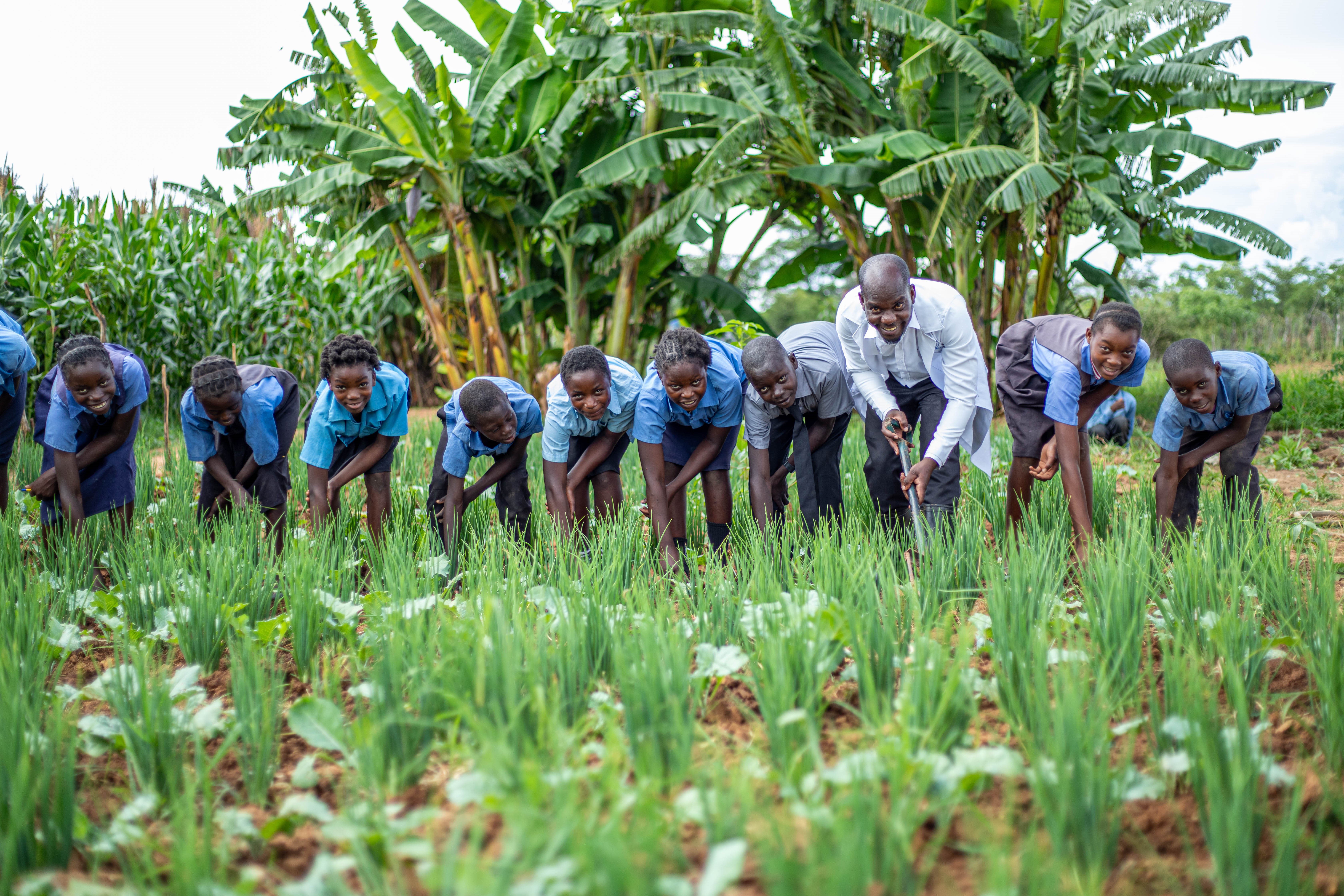
Abigail and her classmates work on their school nutrition garden during a practical class in agriculture under the guidance of their schoolteacher, Mandevu Lungu at Maimwene primary school in Mumbwa district. Photo credit: WFP/Nkole Mwape
In Katete district, Penjani highlights how drip irrigation and the organic sack gardening has revolutionized their agriculture classes, inspiring dreams of enhancing diverse food production to feed the whole of Zambia and beyond. "Drip irrigation is like a straw for plants. It gives them water little by little so they don’t dry out and can survive during drought. The system is great at conserving water. It’s one thing to theoretically learn about something and try to visualize the impact, and another when you get to see and experience the impact," says Penjani.
“We are also learning how to grow many types of vegetables on these sacks to improve nutrition. This is an efficient way of growing food especially for people with limited space or who have land that has low soil fertility, because we can fill the bags with soil mixed with manure. This process is also cost effective because local materials are used allowing production of food using a little water as the sack helps to retain moisture”, Penjani explains.
With the support of the World Food Programme, the Zambian Government is implementing the organic sack gardening and innovative technologies to enhance agricultural education with 71 hydroponic school food production plots in 16 districts as well as six irrigation systems in four districts. Transforming schools into agricultural community learning centres, this initiative is part of a broader effort to promote sustainable school meal models that benefit children and their communities while strengthening food systems across Zambia.
“This demonstrates the Government of Zambia’s strong commitment to reach 4 million school children with nutritious meal every day by 2026,” says Ms. Cissy Kabasuuga, the World Food Programme Representative in Zambia. Supporting school nutrition gardens, she said, diversifies food production, sustains a fresh food supply, and guarantees that children always receive their nutritious meals at school.
Abigail reflects on the positive changes in their meal provisions and emphasizes the importance of creative solutions for school meals. "We should all do what we can to promote school meals, and I appreciate the support from teachers and so many others. It means they believe in us! I am happy that I am gaining excellent skills which will benefit me beyond school. I am lucky I get to learn how to produce the food and get the opportunity to also enjoy the food," she says.