
By Tsitsi Matope
Last year, World Vision International ignited a powerful movement with the launch of the ENOUGH Campaign, a bold 3-year global initiative aimed at eradicating child hunger and malnutrition. Global School Meals Director Mary Njeri shares how the campaign is ambitiously expanding school meal programmes to reach children in conflict settings. She explains how this initiative is supporting global efforts like the School Meals Coalition and the Global Alliance against Hunger and Poverty, making a transformative impact worldwide.
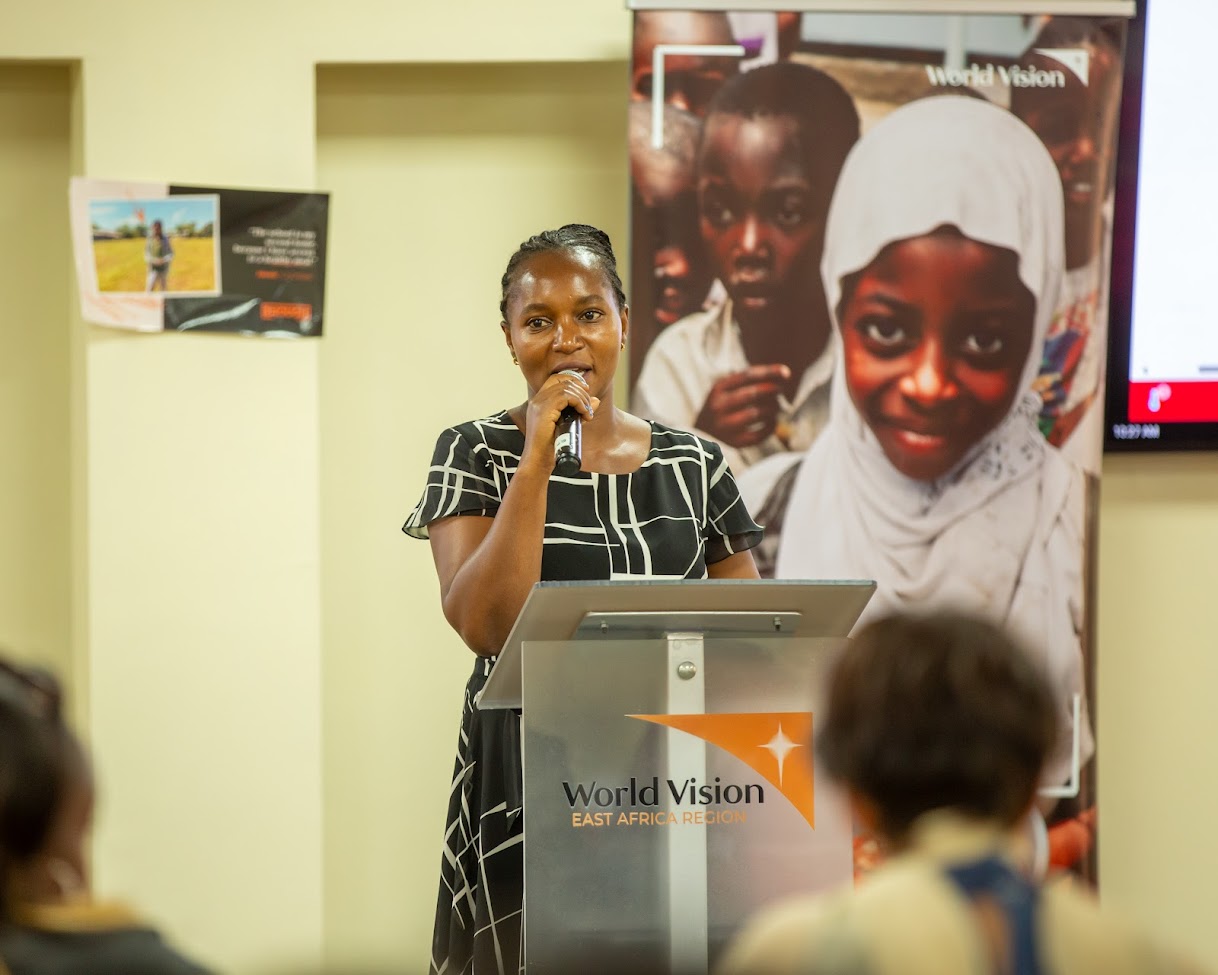
At a recent partnerships meeting, World Vision International's Global School Meals Director, Mary Njeri shared some insights on how the ENOUGH Campaign is supporting children in fragile settings. Photo: World Vision International.
World Vision is mobilizing partnerships to extend school meal programmes in countries battling crises. Tell us more about your work and how World Vision’s interventions are making a difference.
I am privileged to step into my role at a time when school meal programmes are a top priority for governments and partners in countries and on the global stage. World Vision prioritizes school meals as a high-return investment to ensure children’s well-being and development, which also impacts their families and communities. For example, since the launch of the Global Hunger Response in 2022, 1.8 million children have benefitted from World Vision-supported school meal programmes, partnering with governments, UN agencies and other NGOs and local community members. Community-based initiatives integrated into programmes have supported smallholder farmers in improving the production and supply of food in schools. With this support, smallholders can generate income and feed their families.
We launched the ENOUGH Campaign to step up our work in eradicating child hunger, which includes expanding coverage of school meals in conflict and fragile contexts. One of the challenges we encounter in the countries where we work is the risk for girls. When they drop out of school, there is a risk of child and forced marriages. We are seeing that the investment in school meals is helping to keep girls in school and to ensure they are protected. Furthermore, the campaign is paying close attention to strengthening child protection. Over 40 World Vision field offices prioritize school meals in their operational plans as a crucial intervention to safeguard the rights of all children, including those with disabilities.
School meals have become a top priority for almost all governments worldwide, making them a key global agenda; what role is World Vision playing in contributing to this global agenda?
As a partner in the School Meals Coalition, World Vision finds great value in engaging and guiding other civil society organisations. Led by member governments, the Coalition sets the agenda for school meal programming around the world. We collaborate to set the global agenda for school meal programmes, influencing and facilitating joint actions to reach more hungry children and support communities. At this year’s UN General Assembly and the Summit of the Future, we partnered with the Government of Brazil, BRAC, WFP, SDG2HUB, ACAO and Hungry for Action, showcasing successful partnerships and highlighting new opportunities. In October 2023, with Plan International and the International Parliamentary Network for Education, we led a Civil Society Call to Action on School Meals, signed by over 100 organizations.
We also joined an Open Letter urging world leaders to support Global Alliance against Hunger and Poverty, emphasizing school meals as a priority policy. As an NGO working in frontline communities and witnessing daily the catastrophic effects of the unprecedented global food crisis, we support the President of Brazil (Luiz Inácio Lula da Silva) for driving actions to fight hunger and poverty and making school meals one of the Global Alliance’s priority policies. School meal programmes are crucial in this fight, and It’s critical that CSOs stay engaged to support governments on community needs, and to help implement, enhance, and grow school meal programmes. These initiatives are vital for immediate and long-term impact.
What potential opportunities are you seeing emerging as partners of the Global Alliance and the School Meals Coalition?
In our scale-up plan under the ENOUGH Campaign, we are mobilizing more resources to reach 5 million children directly with school meals in the next three years. The challenge is accessing the required funding to meet our target. This is the main challenge that most NGOs face – a lack of sufficient and sustainable funding to provide longer-term support, especially in countries battling chronic drought situations and in conflict settings where both emergency and development support is needed.
A study by the Global Child Nutrition Foundation showed that, on average, 70% of global school meals funding is coming from governments, and we applaud global initiatives such as the School Meals Coalition, which is mobilizing government leadership to increase their investment in school meals. However, when we look at low-income, fragile, conflict-affected countries, that funding is down to 25% or much less. Development partners, including NGOs, play a crucial role in filling that gap, which unfortunately continues to grow.
The launch of the Global Alliance comes when we are experiencing the lowest level of humanitarian funding compared to the growing needs that exist. We are optimistic that the partnership of the Global Alliance and the School Meals Coalition will combine efforts for us to start seeing more resources moving to countries worst affected by hunger and to support those who are struggling to address the underlying causes of hunger, such as conflict and economic shocks.
You have worked with many governments over the years; what are the key areas you think they need to pay more attention to if they are to develop self-financed and more sustainable school meal programmes?
Let me speak to governments in drought-prone and conflict-heavy settings first. There is a need to invest in programmes that address the root causes of hunger and malnutrition, such as intentional programmes that support good governance and promote lasting peace. Where there is peace, communities are productive, even in the event of recurring droughts, governments can anticipate these and invest in programmes that can develop communities’ resilience.
In most developing countries, there are opportunities in agriculture and food systems, but a significant number of countries struggle to produce enough to meet their food requirements due to many reasons, including rising costs of production, falling incomes, extreme weather conditions with no insurance for smallholder farmers, outbreak of diseases and pests, cumbersome administrative procedures and conflicts. Most unfortunate is that even those who produce experience significant post-harvest losses due to poor storage practices, inadequate infrastructure and lack of storage facilities. Many interventions are needed to build smallholder farmers' capacities, for example, to help them overcome their challenges and sustain their farming operations.
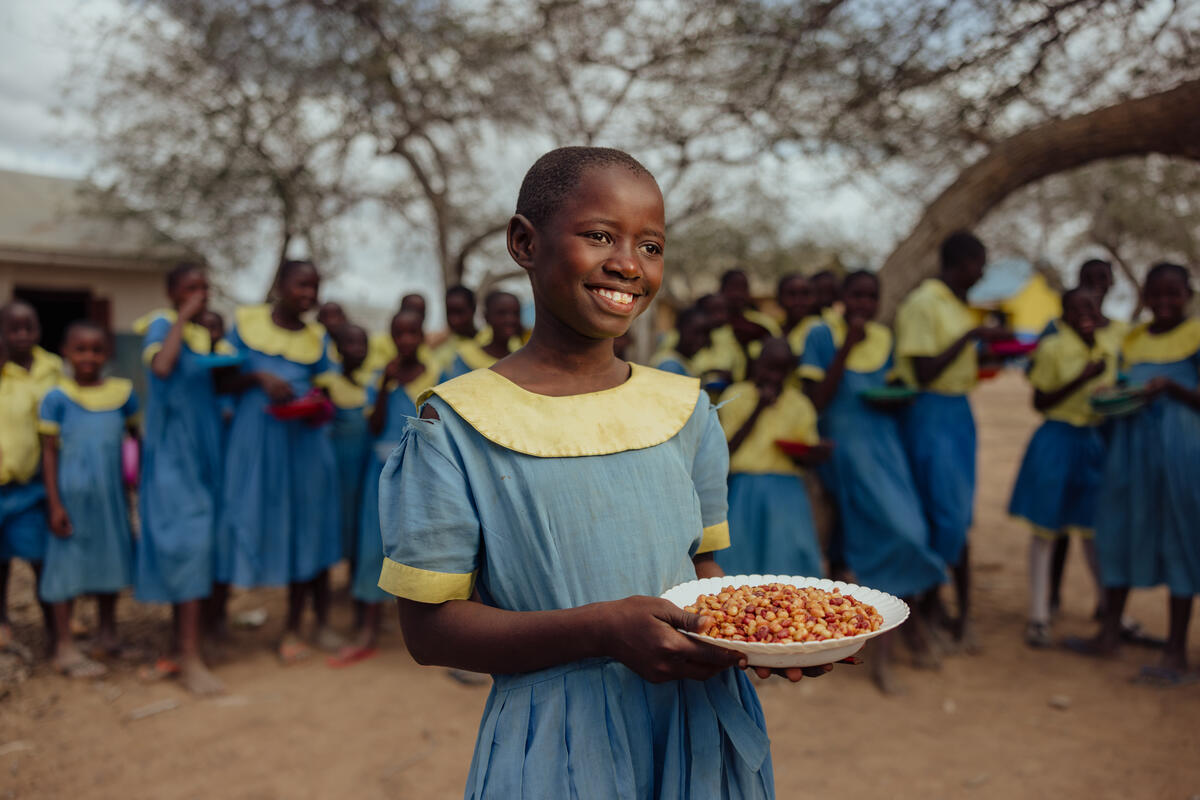
When governments join global initiatives such as the School Meals Coalition, they have access to a large pool of partnerships to help them gain more knowledge on designing strategies and programmes that effectively address challenges. For example, through our partnership with the Government of the Democratic Republic of Congo in Kasai Central and Lomami provinces, we are running school meal initiatives covering 63 schools, supporting the government to develop policies that promote school meals. All primary school learners receive a daily meal, and the programme includes a kitchen garden component to diversify the food provided. We also integrated deworming and nutrition education to promote good health.
What lessons and best practices have inspired your work, which should be replicated and expanded?
The first thing that comes to mind is the home-grown school feeding model. It’s an excellent programme design that should be widely expanded, notably in developing countries. At World Vision, we have seen firsthand how this model can benefit children, their families and communities. The model prioritizes sourcing food locally, which supports local economies and ensures fresher, more nutritious meals are delivered in schools. It also helps reduce the environmental impact of food transportation. For example, in Angola, World Vision and partners are supporting cooperatives of smallholder farmers to improve the quality of their produce and be able to supply food in 82 schools next year. In Haiti, World Vision is actively working with local communities, providing nutrition garden support packages to schools and incentivizing establishing and maintaining school gardens.
Another initiative that offers quality support to children and their families is the Take-Home ration programme. Like the home-grown school feeding model, this support mechanism helps families prevent children from carrying part of their school meals home to share with their hungry family members. This is a crucial intervention that should be expanded to significantly improve the lives of children and their families, allowing them to all recover and bounce back.
I am excited to see how these programmes continue to grow, and how we can replicate these in other communities and countries as we lead up to our shared mission of providing every child with a healthy, nutritious school meal by 2030.