
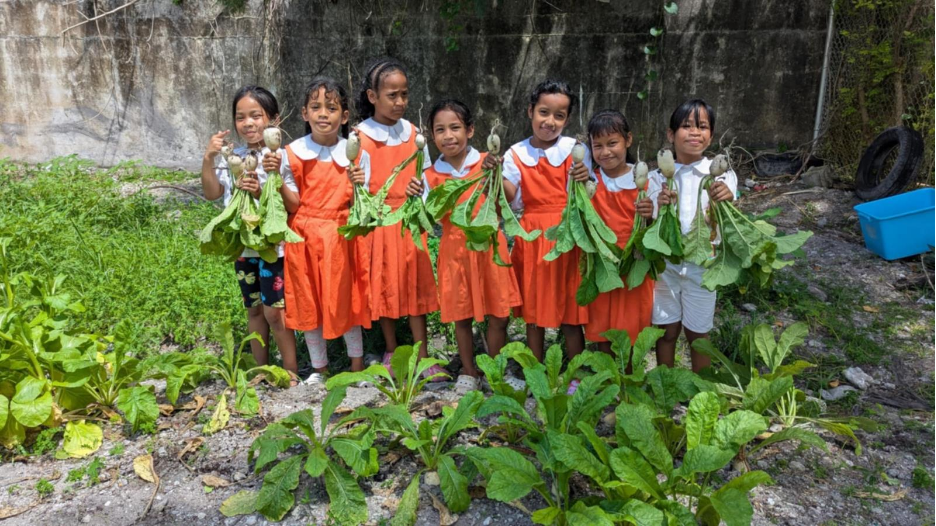
Credit: World Diabetes Foundation
ESTIMATED READING TIME: 3 MINUTES
Every year on World Diabetes Day, the global spotlight turns to one urgent question: how can the world prevent noncommunicable diseases, (NCDs), such as diabetes before they begin?
For the World Diabetes Foundation, a partner of the School Meals Coalition, change starts in schools—where nutrition and health education can give children a headstart on a life full of health and opportunity.
The Foundation believes that classrooms aren’t just places for learning math and reading – rather, they are also powerful launchpads for lifelong health. By weaving nutrition and health education into the school day, children gain the tools to make smart choices early. The Foundation is deeply committed to improving health outcomes and preventing non-communicable diseases (NCDs) such as diabetes, especially in low- and middle-income countries.
The Foundation’s strategy, therefore, puts at its core the importance of primary prevention and healthy environments for children and adolescents, recognizing that early interventions can have lifelong benefits, integrating health education into schools, and emphasizing equity to ensure no child is left behind.
Healthy schools, healthier futures
Through its work, WDF supports projects that transform school food environments, making nutritious meals accessible and helping children develop healthy habits that last a lifetime. Rapid changes in diets and lifestyles have created what the Foundation calls the ‘triple burden of malnutrition’: undernutrition, obesity and micronutrient deficiencies. Tackling this requires collaboration across sectors, which is why the World Diabetes Foundation works with governments and partners to reach children where they learn and grow. By focusing on prevention, the Foundation advocates for meals that are balanced and support overall wellbeing, not just hunger relief.
Education as a form of prevention
Nutritious meals are only part of the picture. The Foundation’s prevention-oriented projects also integrate nutrition and health education into classroom learning, empowering children to make informed choices about their wellbeing. The Foundation believes that children who understand food and nutrition are better equipped to protect their health in the long run.
At the same time, this approach ensures that the most vulnerable children - those who often face the greatest barriers to learning and good nutrition - are not left behind. By ensuring that vulnerable and marginalized children have access to healthy school meals, the Foundation helps break cycles of poor health and limited opportunity, in alignment with the actions driven by member states and partners of the School Meals Coalition.
Working together for greater impact
Partnership is at the heart of the World Diabetes Foundation approach. Working closely with governments, international organizations, NGOs and local communities allows the Foundation to scale effective interventions and adapt them to local contexts.
Government involvement is key to sustaining this progress. By embedding nutrition and health initiatives into national policies and systems, the Foundation helps ensure that school-based health promotion continues long after individual projects end. This partnership model also drives policy change, strengthening advocacy for healthier school environments and prioritizing child health and NCD prevention.
From the Pacific to Latin America and Southeast Asia, the Foundation’s programmes demonstrate how school-based health initiatives can prevent disease and promote lifelong wellbeing. Its impact spans a diverse set of programmes: Education in Lifestyle Diseases and the Majuro Youth Lifetime Health Programme in the Marshall Islands, the School-Based Diabetes Prevention Programme in Mexico, and initiatives to reduce NCD risk in Cambodia.
As the World Diabetes Foundation joins the School Meals Coalition, now uniting more than 110 governments and over 150 partners worldwide, its work reinforces a shared belief: that every child deserves a fair chance at education, nutrition and healthy growth that guarantees them a life of opportunity.
On World Diabetes Day, that belief feels especially clear: prevention starts early. Often, with something as simple as a healthy meal at school.