
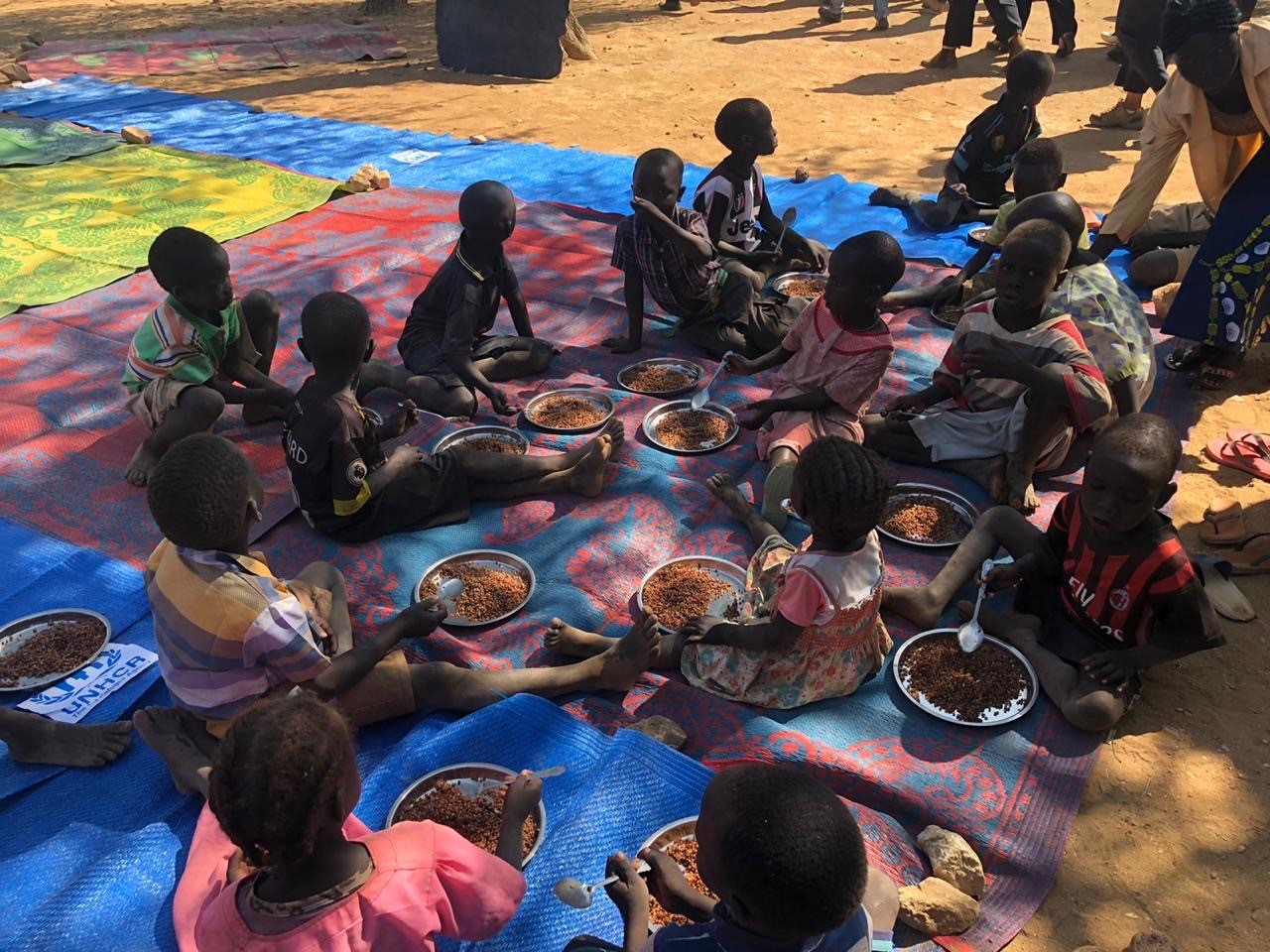
School meal time at a local school in South Kordofan, Sudan. Photo credit: WFP Abeer Etefa
By Tsitsi Matope
“Without this food, it would be impossible for me to go to school. What I am receiving is more than just food. Each bag I take home carries a message of love and hope,” Aisha (14).
More than two years since the armed conflict began, Sudan continues to endure severe clashes, resulting in a significant economic downturn and deteriorating food and nutrition security. Currently, Sudan is the only country in the world where famine has been confirmed and is spreading fast, making it the largest hunger crisis globally. Up to 24.6 million people – nearly half the country’s population are facing extreme hunger. Malnutrition rates are significantly above famine thresholds in the hardest hit locations. Across the country, nearly 5 million children and pregnant and breastfeeding mothers suffer from Inadequate nutrition leading to rapid – and life-threatening – weight loss, which, if untreated, can lead to death.
Some 27 areas across the country – mainly in Darfur, Kordofan, Gezira and Khartoum – are either facing famine or at risk, with two million people a step away from famine. They are resorting to extreme measures to survive, such as eating leaves, grass, or animal feed. In addition, 8.1 million people do not know where their next meal will come from, while 612,000 people are enduring extreme hunger in regions such as Greater Darfur and Greater Kordofan.
The food crisis is exacerbated by the displacement of over 12.5 million people who were forced to leave their homes since the conflict started in April 2023. More than half of the displaced population are children below the age of 18. This has seen many of them unable to attend school, as almost all have closed, while others struggle to operate under these challenging conditions. This has disrupted learning and the provision of school meals to millions of children. In some places, these schools have even become a refuge for families who escaped conflict. Yet amid these trying times, one lifeline has remained crucial for thousands of children: Food. Through initiatives like “Take-Home Rations,” international organizations are identifying new funding streams to bolster innovative solutions that can expand and improve the quality of emergency school meals. Organizations such as the World Food Programme (WFP), Catholic Relief Services, Islamic Relief Worldwide, Building Resilience Development Organization (BRDO), Plan International, Building Foundation for Development and SAHARI are implementing Take Home Rations and providing cash to combat hunger and provide essential micronutrients. This is supporting not only the children but also their families and teachers. In some areas, initiatives are encouraging families to send their children back to school when they reopen, rather than keeping them at home for household chores or resorting to harmful coping strategies.
Currently, nearly 270,000 school-aged children are receiving the World Food Programme Take Home Rations across the States of Gedaref, Kassala, Northern State, River Nile and Red Sea. In Kassala State, where families have been severely affected by rising food insecurity, this initiative is more than just a source of food – it has become a symbol of stability and resilience. Thirteen-year-old Fatimmah says the monthly ration of sorghum and oil her family receives through her school has helped them through some of the toughest weeks. "When school closed, I was afraid I wouldn’t get the food anymore. But my teacher told us to continue coming to collect food. Thanks to this support. The food is helping my whole family, and I know I’ll go back to school again soon," she says with a shy smile.
Amina (14), also from Kassala, is receiving both the take home food and cash support for schoolgirls, provided by WFP, Resilience Development Organization and Plan International. This cash, distributed as Take-Home support during school closures, is designed to help families keep their daughters in education—even when their classes are not in session. For Amina and many other girls, this support is not just about immediate relief; it’s a vital lifeline that ensures their education continues, offering hope and stability in uncertain times.
“With this money, I can buy some food. It has been a big help for my mother to say ‘No’ to some family members who were putting pressure on me to get married. She told them there is help coming for me to continue my education,” says Amina. She wants to train as a nurse after high school. “I will go back and learn when my school opens. The cash is protecting my future and keeping my dream of becoming a nurse alive,” Amina says, her eyes lighting up.
In Atbara, up to 16,065 hungry school children are receiving take home food. Aisha (14) said, "Without this food, it would be impossible for me to go to school. What I am receiving is more than just food we take home; each bag we bring home carries a message of love and hope,” says Aisha.
From the same community, a 42-year-old mother echoed Aisha’s sentiment, explaining that the food her four children receive from Zakat school has eased the burden of constantly searching for their next meal. “The food is a lifesaver. It is helping to keep my children in school,” she said. Like many other families also benefiting from this support, the food packages, she said, are providing newfound strength and dignity and ensuring a basic meal each day for her family.
Community leaders in Atbara have praised the initiative for transforming collective suffering into shared hope. “With a lack of basic services, there is immense pressure on families, leading many to resort to begging or engaging in unsafe behaviour among children. Through this support, we are witnessing a gradual recovery in social ties. Families are beginning to cooperate and coordinate the distributions of rations, and some people are volunteering to organize the process and register those in need. This collective spirit is restoring trust within the community and reinforcing values of solidarity and mutual support,” remarked one community leader.
International organizations remain steadfast in their commitment to Sudan, tirelessly supporting affected communities through the complex crisis. WFP’s Deputy Country Director for Operations in Sudan, Mr. Pablo Yuste stresses the current humanitarian situation, with needs far outpacing the resources available to alleviate all suffering. “The gap between the urgent needs and available aid continues to widen. It would be a great injustice to the people of Sudan, children especially, if we stand by and watch the crisis worsen without doing enough to help,” says Mr. Yuste.
He explains that since the crisis began, nearly all school-aged children—an estimated 19 million—are out of school, facing the grim reality of potentially never returning to school. At least 10,400 schools have been shut in conflict-affected areas, leaving over 5.5 million children in less affected regions uncertain about whether their classrooms will reopen, particularly in the eastern states. As of October 2024, Mr. Bukera says, only 20 percent of schools (3,938) nationwide have reopened. Schools in Gedaref, Red Sea, River Nile, Northern, White Nile and Kassala States remain closed while those in River Nile, Red Sea, and Northern States are now open.
He emphasizes the urgent need to expand partnerships to boost funding to continue delivering nutritious school meals. To sustain food supplies and ensure deliveries are on time, he stresses the importance of working with local farmers. “That way we can make the initiative more cost-effective, support the smallholder farmers to generate income and increase food production to supply schools and also have enough to eat with their families,” says Mr. Yuste.