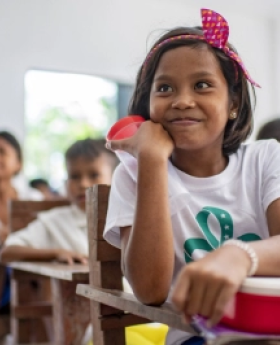
Imagine a bustling schoolyard in the Philippines, where children eagerly tend to their vibrant classroom garden. As part of a school gardening programme, the students are excited to harvest the fruits and vegetables they have carefully cultivated. In just a few hours, these nutritious foods will be served on their lunch plates. This heartwarming scene reflects broader efforts across the Philippines to integrate traditional and indigenous fruit and vegetables into school meals and promote healthy eating habits. Driven by a commitment to improve the quality of school meals, the Philippines, as a School Meals Coalition member, has introduced various initiatives aimed at supporting the health and well-being of students. Beyond combatting hunger, these efforts are designed to enhance learning outcomes and foster a brighter, healthier future for the nation.
Aligned with these goals, the Alliance of Bioversity International and CIAT, also a partner of the Coalition, is promoting fruit and vegetable consumption in the Philippines through a CGIAR Research Initiative on Fruit and Vegetables for Sustainable Healthy Diets (FRESH). In collaboration with the International Institute of Rural Reconstruction (IIRR) and other local partners, FRESH contributed to a desk review of the country’s school food environment literature, policies, and guidelines.
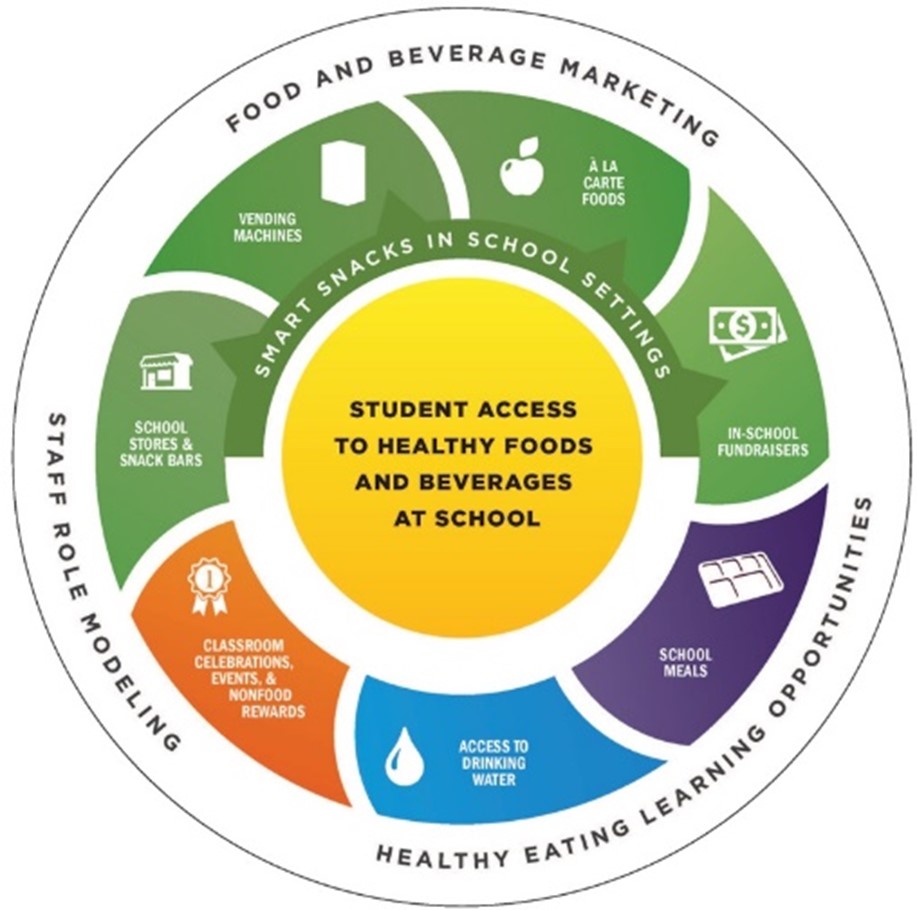
Fig. Components of the School Nutrition Environment and Services; CDC Healthy Schools.
The study was the first of its kind, highlighting opportunities to better utilize the diverse range of fruits and vegetables grown in the Philippines for school meals and to improve the broader school food environment.
Unpacking the school food environment 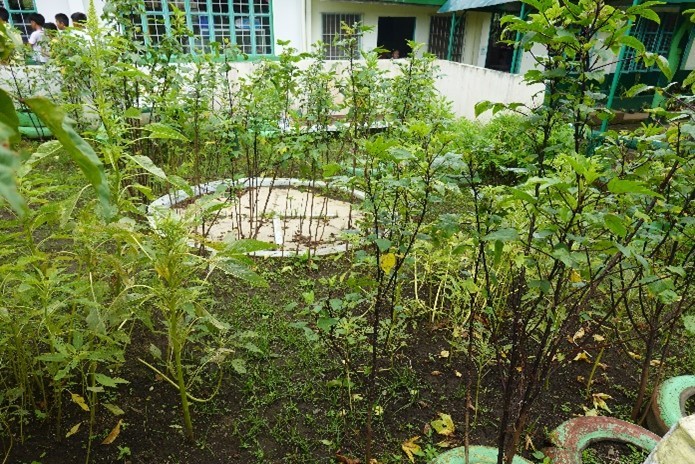
Think back to when you were in school. What kind of meals or snacks did you typically eat during the day? Whether you ate at school, packed your lunch, or visited nearby food stalls with friends, the school food environment influenced what food options were available. The school food environment encompasses the spaces, infrastructure, and conditions inside and around schools where food is available, purchased, and consumed by students. These environments are shaped by the surrounding economic, political, and socio-cultural contexts. Unfortunately, unhealthy foods are easily accessible in and around schools in the Philippines. As children increasingly consume more sugary, salty, and fatty products, a healthier school food environment could empower them to make better food choices.
Building a brighter future in the Philippines
Maintaining a healthy, diverse, and balanced diet is critical for children, as proper nutrition supports physical, social, and cognitive development. In the Philippines, low fruit and vegetable consumption and high rates of micronutrient deficiencies signal a need for healthier diets across the population. The mean daily per capita fruit and vegetable consumption is 160 grams – far below the World Health Organization’s recommendation of at least 400 grams per day.
Schools are uniquely positioned to shape children’s dietary behaviors, instilling healthy eating habits that are likely to carry over into adulthood. FRESH’s research identified 13 national policies in the Philippines aimed at shaping school food environments and promoting fruit and vegetable consumption. These policies include guidelines for school meal programmes, school gardens, food safety, and canteen management. The Integrated School Nutrition Model, a collaborative effort between the IIRR, the Philippines Department of Science and Technology – Food and Nutrition Research Institute (DOST-FNRI), and the Department of Education, builds on many of these policies. The Model promotes healthy meals, school gardens, and nutrition education to enhance students’ health and learning outcomes.
Lighthouse School: Leading nutrition innovation
Lighthouse Schools exemplify the Integrated School Nutrition Model in practice, serving as hubs where innovative strategies are tested. These schools support biodiversity and conservation by functioning as seed banks alongside Crop Museums. Meanwhile, their school gardens, set up under the Gulayan sa Paaralan Program (GPP), enhance school meals and play a crucial role in nutrition education. Ms. Rowenna Alcedo, GPP School Coordinator at Upli Elementary school says, "Through this programme, students' perceptions of healthy eating are gradually shifting, leading to improvements in their health. It also inspires and motivates parents to cultivate their own gardens at home, furthering the school's mission to enhance knowledge and promote healthy attitudes towards nutrition and gardening."
Embracing traditional and indigenous foods
With support from FRESH, the Integrated School Nutrition Model prioritizes the use of traditional and indigenous fruit and vegetables for conservation, seed system development, and consumption. Indigenous species include vegetables such as jute mallow (Corchorus olitorius) and amaranth (Amaranthus spp.), and fruits such as elephant apple (Dillenia philippinensis) and java plum (Syzygium spp.), amongst others.
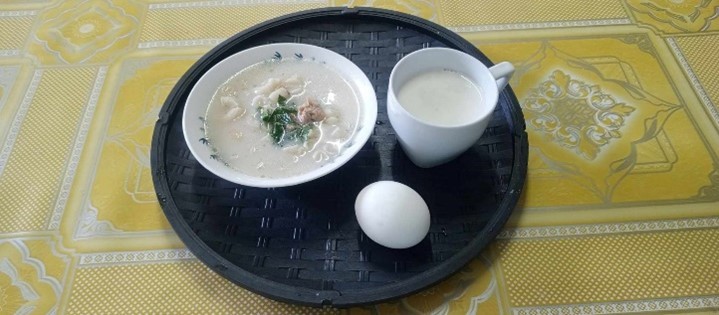
This focus is enhancing school meals- fresh amaranth from Upli Elementary School’s Garden (pictured above) is used to prepare a hearty macaroni dish with pork strips (pictured below). Further, it strengthens efforts to diversify school gardens across the country, promoting collaboration between schools, local farmers' associations, and research institutions. Teachers in many schools are also leveraging these gardens to educate students and communities on the importance of traditional and indigenous fruit and vegetables in food security and nutrition.
The journey forward
Reflecting on the progress made to improve the quality of school meals in the Philippines, Dr. Dexter Galban, Assistant Secretary for Operation at the Department of Education says, “With continued collaboration between the government, schools, and innovations like FRESH, the Philippines is well on its way toward providing every child the chance to enjoy a healthy and nutritious meal in school.”
By harnessing the power of traditional and indigenous fruit and vegetables, the Integrated School Nutrition Model is transforming school food environments and promoting healthier diets nationwide. FRESH’s desk review provided valuable insights into these efforts, laying the foundation for future research to refine strategies and maximize the impact of school-based nutrition initiatives. With continued innovation and collaboration, the Philippines is securing a healthier future for children both in and out of the classroom.
To learn more about the Philippines' support of the School Meals Coalition read this blog post by Dr. Galban, detailing the government’s partnerships for improved school nutrition.
This article was co-authored by Sharon Mendonce and Teresa Borelli from the Alliance of Bioversity International and CIAT; Sydney Honeycutt from the International Food Policy Research Institute; Ma. Shiela Anunciado; and Diana Jean Umali from the International Institute of Rural Reconstruction. Photo credits: Upli Elementary School, Tagaytay City