
By Tsitsi Matope
Each of the 32 school meal initiatives is tailored to accommodate the farm produce grown in various regions with respect to regional food culture and traditions.
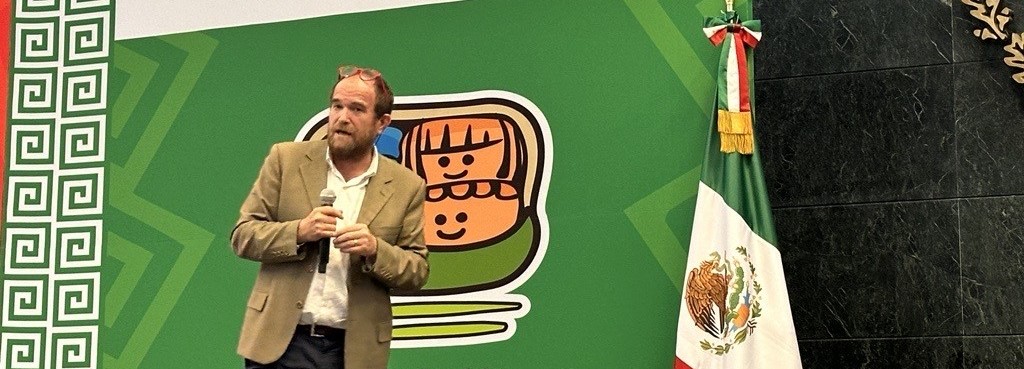
The Government of Mexico has partnered with the World Food Programme (WFP) to host the 10th Regional School Meals Forum held in Mexico City from 27-29 August. This Forum brought together representatives from governments implementing national school meal programmes, civil society organizations, and other key actors in school meals. To understand more about school meals in Mexico, the School Meals Coalition spoke to Mr Ruy López Ridaura (RLR), the Under-Secretary of Prevention and Health Promotion, who is also the National Convenor for the Transformation of Food Systems in Mexico.
Q: The government of Mexico works with farmers to provide food items such as eggs, poultry, and vegetables. You are also partnering with the private sector engaged in food trading, processing, and transportation. Can you share with us some of the unique features of Mexico’s school meals?
RLR: In Mexico, there are 32 school meal initiatives across all regions, each unique in its own way and built around the regulations and guidelines established by subnational governments. They work through the National System for the Comprehensive Development of the Family. This decentralised organization generates a Comprehensive Social Assistance Strategy each year to guide the school food purchasing criteria, which is very important for us. This year’s strategy is promoting buying at least 30% of food from local producers, and in particular smallholder farmers who include women.
On the one hand, this aims to align meals with the regional culture and traditions to preserve the food practices of the local communities. On the other hand, we are promoting regional development by pushing for inclusive systems that enable an organized way of working with local municipalities and communities. This is ensuring collective decision making in the process of integrating local foods into the school meal initiatives, demonstrating sensitivity to communities’ culture and children’s nutritional needs.
When we started implementing this strategy, we realised there were many local farmers interested in partnering with schools, but they needed support to improve the quality of their produce. Because we are using school meals to boost food production and ensure we have adequate supplies in schools, we are working through local governments to improve capacities and ensure the quality and safety of the produce.
By supplying school meal ingredients, local farmers are earning a living and helping to grow Mexico’s economy. We are in the process of expanding our school meals coverage, implemented in 40% of our schools to increase returns from the initiatives.
Q: One of your priorities reflected in the national commitments submitted to the School Meals Coalition is putting school meals on the national agenda. How is your participation in the Coalition supporting efforts to further advance this agenda in Mexico?
RLR Mexico joined the School Meals Coalition last year, with a set of objectives. Firstly, to focus on designing government-led initiatives that can influence all ministries to appreciate the importance of school meals, and to generate evidence that can strengthen regulations on food environments to prevent conditions that promote excessive weight gain. We also wanted to learn from other countries how to create strong links between school meals and food systems, and showcase at the national level, the positive impact on agricultural production in terms of increasing quality and creating new jobs.
We are impressed by our achievements so far, especially how we have been able to collaborate with other ministries and departments to promote the institutional work of the government supporting school meals. We have published new “Food Guides” based on the different types of food consumed by Mexicans and developed standards for front food labelling. We would like to see warning stamps for foods with excess macronutrients and these efforts are complemented by other consumer protection initiatives. These include the prohibition of advertising of processed and ultra-processed products in schools following the reform of the Education Law and the Health Law. The new National Intersectoral System of Health, Food, Environment and Competitiveness, created from the recent General Law of Adequate and Sustainable Food, is also supporting our efforts.
Q: Mexico has recently updated the Nutrition Guidelines for school children. Can you tell us more about the new regulations and what prompted the revision of the guidelines?
RLR: The Education Law promotes the development of nutrition guidelines by the Ministry of Health, to provide nutritional criteria for all food served in schools and for these guidelines to be reviewed after every five years. The current set of guidelines makes provisions for the sale and distribution of prepared and processed foods and beverages in public schools and have, as their principle, the best interest of every child. They promote the consumption of foods and beverages that do not have warning seals for excess macronutrients and establishes sanctions for authorities that fail to comply, based on the Healthy and Sustainable Dietary Guides for the Mexican Population 2023.
Q: Looking at the design of the National School Meals Programme in Mexico, what mechanisms have been implemented to support better implementation of standards in the value chain?
RLR: Our goal is to ensure that the National School Meal Programme, in addition to providing social protection to the girls and boys who receive them, can also provide a boost to the transformation of food systems, strengthening local food production and, of course, promoting smallholder farmers. Through the 10th Regional School Meals Forum for Latin America and the Caribbean, we showcased some of our projects working to achieve our objectives. We have opened doors to a project initiated by the Mexico City, which provided lessons in food purchases made in each school centre.
In this project, a committee of parents purchases food in stores near the school to prepare in kitchens at each school cent. Food purchases are supervised by government personnel to ensure the food has adequate nutrition and is used according to defined menus. The parent committee receives resources on a weekly basis, according to the number of children registered at the school centre, and the families prepare the food. The Government of Mexico City also provides financial support to parents or families who participate in the purchase and preparation of food.
Now let's imagine the positive impact of the nearly US$ 1 billion dollars that Mexico invests in 6 million children who receive school meals, in the hands of farmers, food producers and small merchants. It really generates game-changing results! To put it on a regional scale, the results are incredible with more than 80 million children receiving school meals sourced locally.
Q: Mexico is moving from providing only industrialised cold breakfast meals in schools to serving hot meals. What best practices and lessons can you share with other countries looking to making a similar transition?
RLR: What is crucial in this gradual transition from industrialised cold breakfast meals is the institutional coordination of multiple actors involved. We have put in place mechanisms for regular training of cooks and again emphasising consistency when it comes to monitoring the food spaces. We collaborate with children’s parents and families, providing guidance on healthy diets for children, including adolescents. Families are responsible for what children eat at home and therefore it's important for us to foster a seamless healthy diet for both school and home. This partnership with children’s families is improving their development and enhancing the quality of learning.
We have learned that hot breakfast meals prepared and consumed in schools promote collaboration at the community level. Activities are stimulating conversations on how to improve communities’ contribution to school meals and enabling them to see the opportunities and gaps, such as nutritious foods they can produce and be added to school meals. For example, the national school meals programme is a ready market for perishable foods such as vegetables and fruits, which many smallholder farmers are producing across Mexico.
It is important for countries to also understand that our transition has not been easy, and it took commitment to achieve what we have so far. In the administration of President López Obrador, we started with 49% of hot school breakfast meals and 51% of cold meals. Currently we have reached 65% of hot meals and 45% are cold. We are driving to reach 100% hot meals, and this requires investment in infrastructure to enable food preparation in schools. We are partnering with the Ministries of Education and Welfare (Social Development) to boost our resources to establish and improve the school kitchens.
The government cannot do this alone, so we are extending a call for partnerships to parents, local communities, the private sector, partners within the School Meals Coalition and other actors who believe in the power of school meals.