
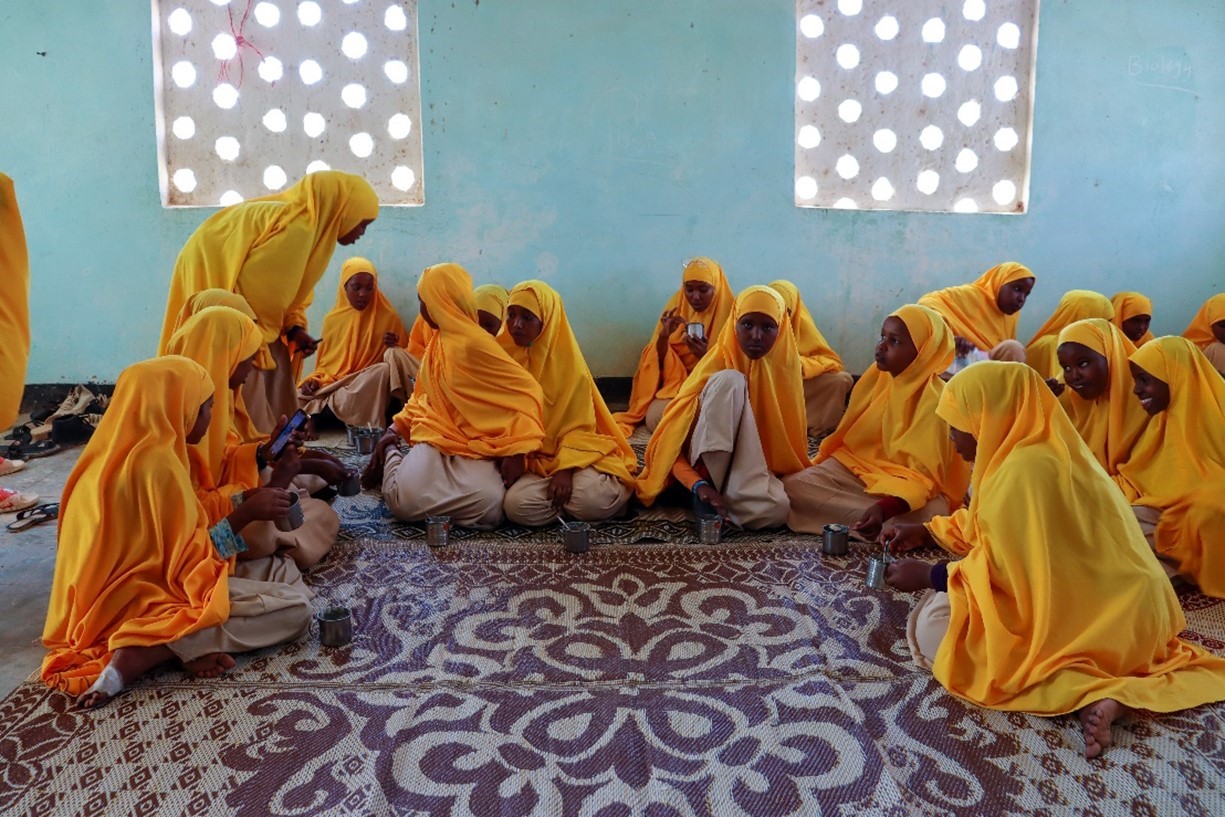
School meals at Sinujiif school in Somalia where the programme is keeping girls in school. The government is mobilizing additional funds to ensure all children across the country receive nutritious meals to improve learning and remain in school. Photo credit: WFP/Somalia.
From creative funding to efficient delivery, global momentum is building around innovative financing and partnerships to expand school meals and ensure sustainability of programmes.
As the deadline for the Sustainable Development Goal looms ever closer, global momentum is accelerating to secure innovative financing for school meal programmes – an essential safety net for millions of children worldwide. Leading organizations, including the SDG2 Advocacy Hub, the Rockefeller Foundation, World Vision, the Coalition’s Sustainable Financing Initiative and the Global Child Nutrition Foundation, are calling on governments to act decisively and urgently.
Their message is clear: to sustain and scale up school meals - especially in low-income and crisis-affected regions – governments must embrace bold, innovative financing strategies now.
This call to action was front and centre at a recent event during the World Bank-IMF Spring Meetings, titled: School Meal Programmes: A Proven, Efficient, and Resilient Safety Net. Stakeholders explored cutting-edge financial models that could ensure millions of hungry and vulnerable children stay nourished, healthy and in school. Real-life case studies underscored the stakes. In Sudan, the suspension of emergency school meals such as Take-Home rations threatens to leave over 487,700 children without the support they need to learn and thrive. In Somalia, Dr. Uweis Abdullahi, Chief Economic Advisor and Executive Director of Economic Planning, emphasized that with the right tools and support from development partners, governments can build sustainable, nationally owned school meal programmes. “Due to a hunger crisis and conflict, our fiscal space is constrained. This has forced us to reduce the number of children receiving school meals from 200,000 to 94,000 this year,” Dr. Abdullahi explained. “The children who suffer this inconsistency become disillusioned, and together with their families, they lose trust in the education system we are trying to develop,” said Dr. Abdullahi. He emphasized the need for reliable, long-term financing mechanisms for school meals to allow governments to focus on strengthening technical capacities and make structural and infrastructural improvements that can respond to current financial challenges. Learning from other countries that have successfully used blended financing, including partnerships with the private sector, Somalia is charting a new path for its school meal programme through negotiations for debt swaps.
In Indonesia, President Prabowo Subianto’s government aims to reach 82.9 million children with nutritious school meals by the end of this year. It has launched the national school meals programme starting in 26 provinces. Already, 300,000 children are receiving nutritious meals, in a country where 60% of children lack adequate nutrition. Mr. Dadan Hindiyana, Director of the National Nutrition Agency in Indonesia, said the government has committed US$10.6 billion to reach nearly 83 million children with school meals. “We have made progress to ensure the success of the programme, through the national budget. We are optimistic that we will meet our target,” said Mr. Hindiyana.
Participants stressed that, considering aid cuts, governments should explore innovative ways to create funds in-country, with technical support from development partners such as the Sustainable Financing for School Health and Nutrition (SFI), an Initiative of the School Meals Coalition. The Sustainable Financing Initiative launched a new report: Innovative Financing for School Feeding. Dr. Liesbet Steer, President and Chief Executive Officer of the Education Development Centre, which hosts SFI, stressed the importance of combining domestic resources with international financing to build sustainable programmes.
“Financing is one of the biggest barriers to implementing sustainable school meals, especially in low-income countries. It costs about US$60 per year to feed a child, yet in many low-income countries, only $23 is spent on a single child,” said Dr Steer. SFI’s latest report estimates that with an additional US$3.6 billion annually, school meal coverage could reach 60%, benefitting an additional 236 million children by 2030. While domestic finance is crucial, she noted that many governments face severe constraints with limited revenues and increasing debt. “Solutions like sin taxes, which tax harmful products and allocate the revenue to public goods, have shown promise. For example, the Philippines successfully uses sin taxes to fund school meals. Similarly, Bolivia uses hydrocarbon tax for the same purpose.”
To support efforts by governments, Dr. Steer said that international support must be increased, focusing on innovations such as debt swaps, commonly used in the climate sector. “This could be adapted for school meals, while wider debt relief and integrating school meals into climate finance and blended finance initiatives can mobilize more resources.” She explained that partnerships like the G20 Global Alliance against Hunger and Poverty aim to expand school meals access, multilateral development banks play a critical role by leveraging funds. “Innovative mechanisms like the International Financing Facility for Education could integrate school meals, using special guarantees to leverage multilateral development banks’ finance.”
The Rockefeller Foundation, a School Meals Coalition partner, addressed a crucial question regarding the role of philanthropy in supporting governments to expand and improve the quality of their school meal programmes. Mr. Mehrdad Ehsani, Vice President of Africa Food Initiative at The Rockefeller Foundation emphasized a multi-sectoral approach to school meals financing, aiming for better returns on investment and broader outcomes. “We are funding research to capture the full potential of school meals, including climate and food system benefits. On the other hand, cross-country learning and technical assistance are crucial to support locally grown food, clean cooking and optimize meal delivery. Countries like to learn from their peers, and we are partnering with organisations to institutionalise this kind of support.”
The Global Partnerships for Education (GPE), also a School Meals Coalition partner, highlighted their support to governments to integrate health and nutrition, strengthen policy frameworks and implementation in countries such as Lesotho. Innovative financing remains at the core of GPE’s strategy, focusing on flexible matching grants and debt-to-education financing, which has successfully catalyzed significant funding in Haiti and Côte d’Ivoire.
Other speakers stated the need to support governments in exploring ways to make school meal programmes cost-effective and efficient, suggesting a review of certain policies to free up resources and investing in more impactful programs, such as school meals. Purnima Menon, Senior Director for Food and Nutrition Policy, stressed the importance of actionable recommendations grounded in solid evidence and advocated for financing mechanisms that support ongoing research and data investments. Watch the full conversation.