
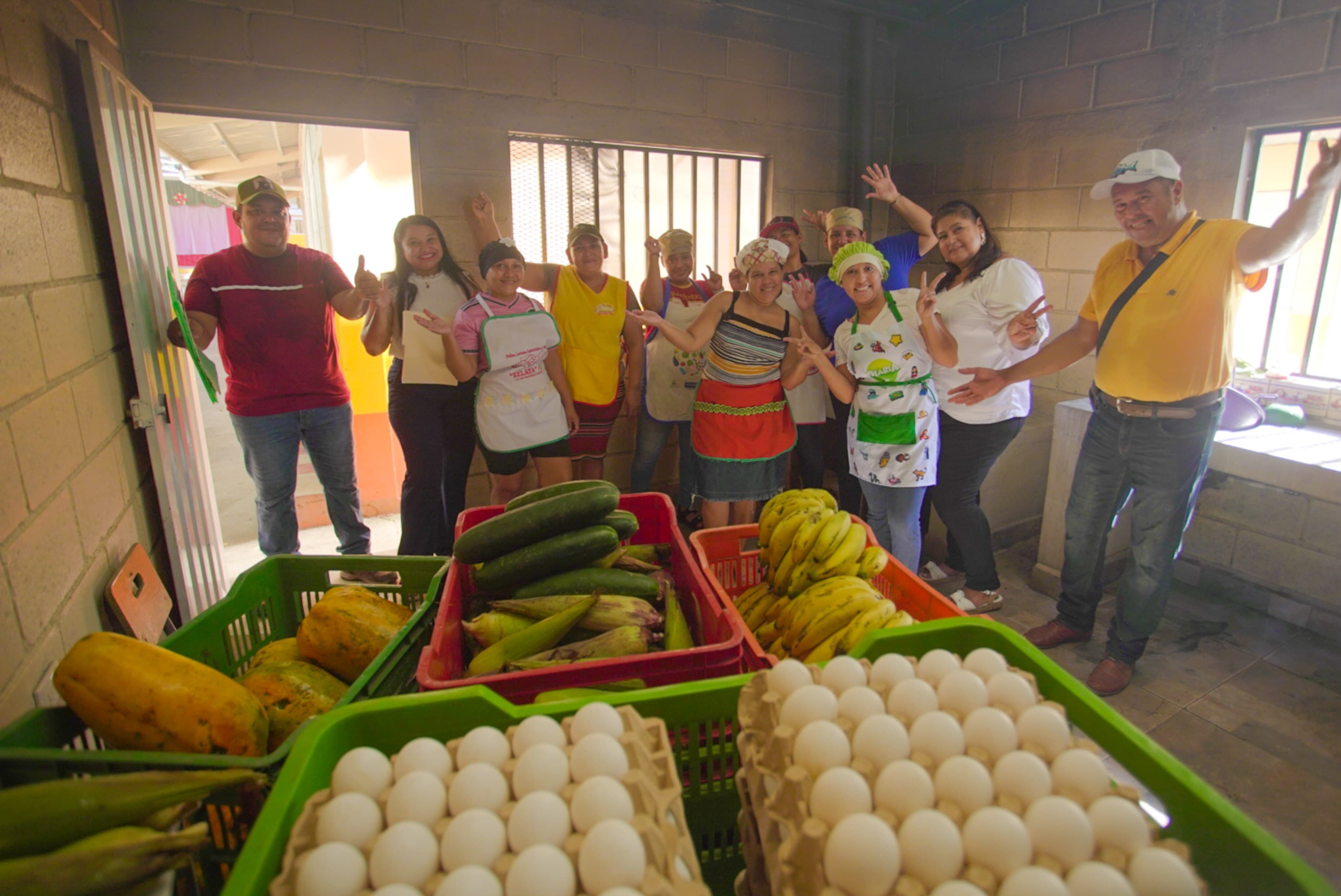
Some of the food delivered by farmers at a local school in Choluteca. The Government of Honduras is open to new partnerships that can further enhance the Fresh Ration project supporting farmers to supply food to schools. Photo Credit: WFP/Honduras
By Hetze Tosta Lopez in Honduras
Honduras’ Fresh Ration project successfully delivers locally sourced food to schools, benefitting 30,130 children. The Initiative sources food from 292 smallholder farmers in the regions of Choluteca, Ocotepeque, Copan, and Lempira, enhancing students’ diets with a wide variety of vegetables, fruits, tubers and eggs.
By supporting these farmers, the Government of Honduras, in partnership with the World Food Programme, is fulfilling its commitment to connect the home-grown school feeding programme with local agriculture. This collaboration aims to improve the nutrition and quality of school meals. With the further support of the Government of France and the Church of Jesus Christ of Latter-Day, this project contribute to boosting production and diversifying school meals.
Farmers make weekly deliveries of food, including sweet potatoes, mangoes, cucumbers, cashew nuts, and beans. Among these dedicated farmers is Efrain Avila, an egg supplier from the San Jose community. He praises the project for significantly boosting his business.
“We are doing our best to ensure our schools have enough eggs each week,” Efrain shares. “Before the project, we only had 500 chickens due to limited demand. Egg production was primarily for family consumption and local sales. However, with the project’s arrival, the demand for eggs has soared! We now rear 3,000 chickens and harvest 2,750 eggs daily. These are exciting times for our business. We are learning a lot through the project, earning more, and contributing to improving the school feeding programme.”
Pedro Cruz, from Guayabo Pespire, has seen a remarkable increase in his production of vegetables, fruits, and sweet potatoes. “We are thrilled to finally realize our plan to expand production to supply schools. The lack of a good market held us back for years,” Pedro explains.
The project has brought renewed motivation to the farmers. Augustina Murillo from Pespire shares his excitement: “I wake up early daily to tend to my plot, ensuring the vegetables and fruits are ready for our weekly deliveries. The project has inspired me to diversify my production and adopt new techniques to boost yield and quality we must deliver each week.”
Carlos Alvarez from Juan Bautista shares how regular deliveries and consistent income have transformed his family’s quality of life. “My family is happy to receive a steady income each month. This has motivated us to expand the plot to supply more food. We’ve also created opportunities for other farmers who now sell their produce to us. Many farming families involved in this project are delighted. The children enjoying our tasty fruit and vegetables are happy too!” says Carlos Alvarez.
Local communities, including the children’s parents, welcomed the improvements to the school menus. Parents like Ms. Aleyda Reyes have noticed positive changes in their children’s eating habits and food preferences. “Since they started eating different types of foods, I’ve discovered my son enjoys spinach, squash, tamarind, and papaya. I’m now including these foods at home to encourage him to continue eating healthy with us,” says Ms. Reyes. 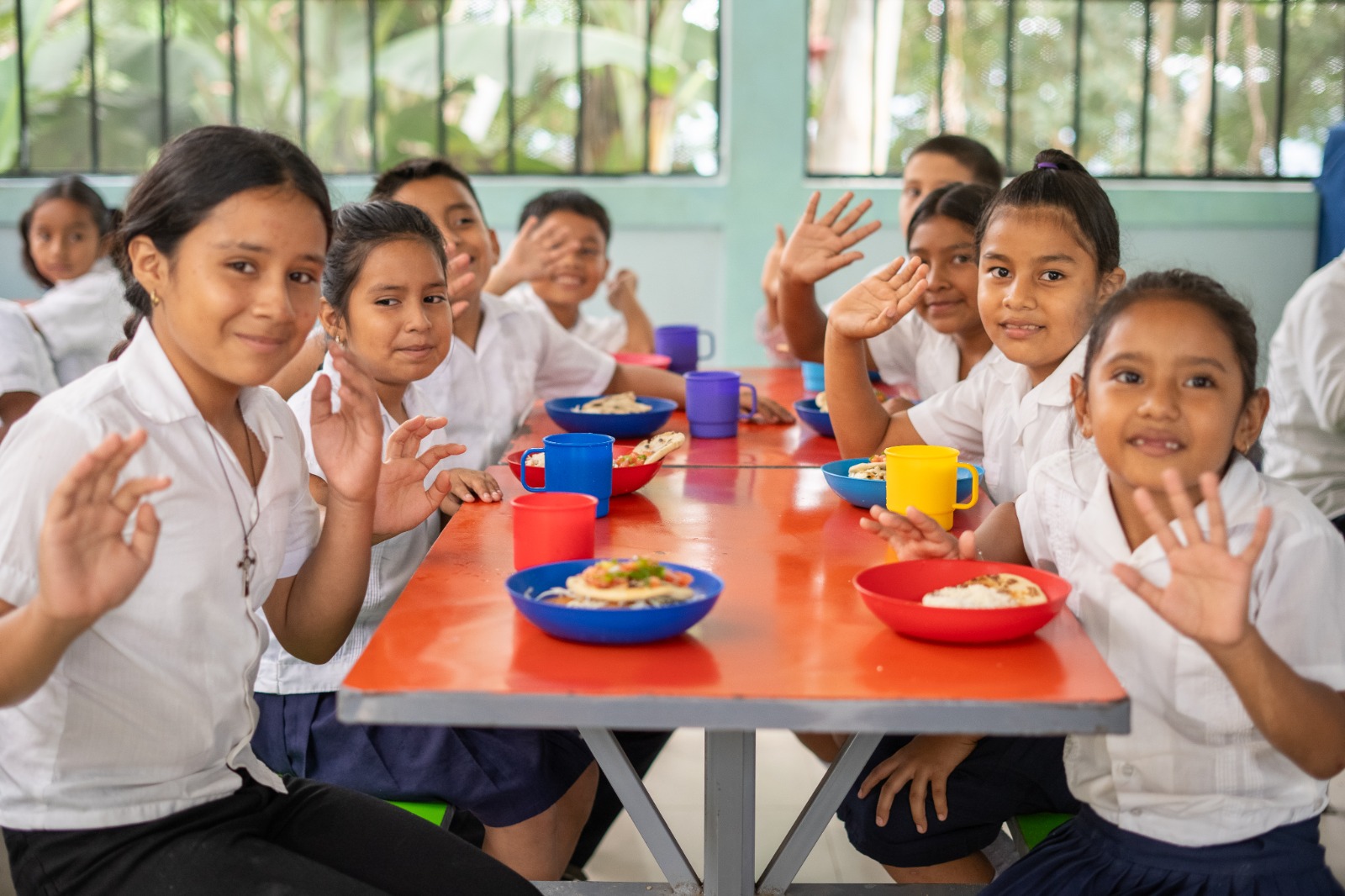
Since farmers started delivering food to schools, children are enjoying a more diverse diet, helping them to develop new food preferences and eating habits. Photo Credit: WFP/Honduras
Mr. Roberto Moran, the Principal at Jose Trinidad Reyes Basic Education Centre highlights the benefits of diet diversity using local foods. “This approach is improving nutrition, expanding children’s taste preferences, and promoting local foods for cultural awareness,” he explains. The school’s direct contact with the farmers supplying the food presents opportunities to influence the production of other food varieties that children would like to see on their plates. “We are excited that the project has sparked conversations around healthy diets among the children, parents, and community, extending the healthy eating environment and habits beyond our school,” says Mr. Moran.