
Finland’s School Meals Programme speaks of humble beginnings that have contributed to building a more equal society. In the 1940s when children from food insecure families were unable to focus on learning, school meals were used as an imperative intervention towards achieving educational equality. Today Finland continues to inspire many governments to up their game when it comes to investing in the next generations using school meals.
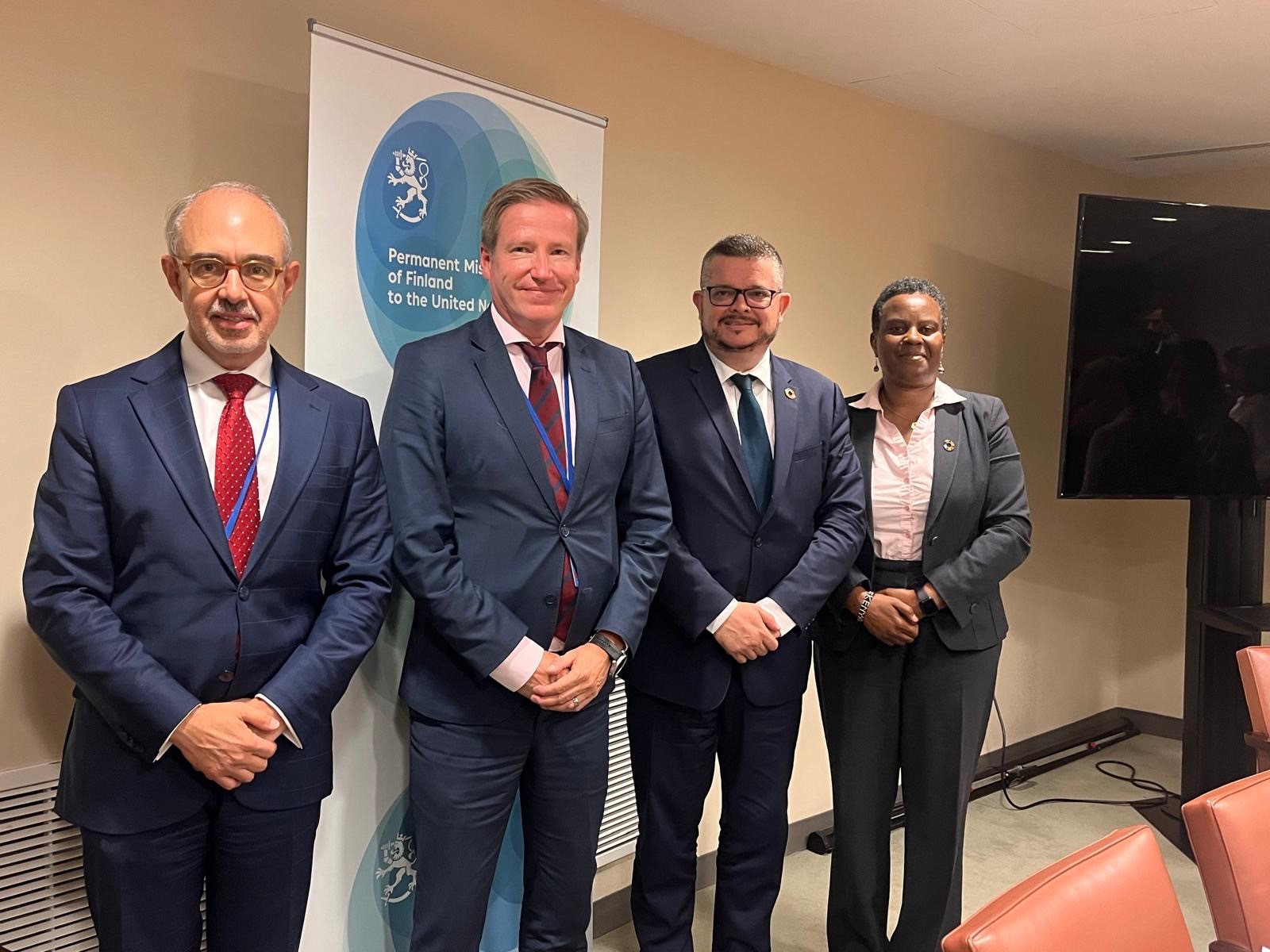
The strong commitment to improve children’s health for better learning, has placed Finland at the forefront in promoting school meals, investing millions of dollars each year to ensure children in developing countries including Central African Republic, Ethiopia, Kenya, Madagascar, and Somalia can also receive meals at school. It is this passion for human development that saw Finland in 2021, teaming up with France in leading the formation of the School Meals Coalition. In this interview, Gift Watanasathorn covering the “Investment in the Future: School Meals for Sustainable Development” Dialogue at the High-level Political Forum on Sustainable Development (HLPF) in New York, speaks to the Under-Secretary of State for International Development at the Ministry of Foreign Affairs of Finland, Mr Pasi Hellman, to share some insights on why Finland has remained a champion for school meals for over 80 years.
Q: Can you tell us why the national school meals programme is so important for Finland –why is Finland championing this global effort?
PH: In 1943, when Finland was in the middle of a devastating war and received foreign humanitarian aid, the government decided to invest in our children’s wellbeing and learning by introducing free school meals. As the first country to guarantee free school meals for children by law, for over 80 years, we have not compromised our commitment to providing every student with a nutritious meal at no cost. And honestly this programme has been instrumental in our own societal transformation. It is a key element in our education system that has helped us to increase our education levels and provide equal opportunities for all to significantly contribute to our own development. We are championing the school meals global efforts because we are confident that by developing quality programmes, all countries can achieve good results. This is especially critical as many nations are currently suffering from an unprecedented food crisis and child malnutrition. The latest Hunger Hotspots report, by the World Food Programme (WFP) and the Food and Agriculture Organization (FAO) warn of an acute food insecurity in 18 hunger hotspots starting from June to October this year. Urgent action by the global community is needed to tackle this crisis, particularly among children. A need to ensure the wellbeing of all children is one key reason we championed the establishment of the School Meals Coalition in 2021, which was followed by the hosting of the first ministerial meeting of the Coalition's Task Force in Helsinki, Finland in 2022.
Q: At the “Investment in the Future: School Meals for Sustainable Development” we have heard many of the School Meals Coalition members and partners delivering strong messages in support of school meals. Can you share more information about the work of this Coalition?
PH: The School Meals Coalition is very important network of networks promoting school meals around the world. We are saying, providing nutritious meals in school is an issue that is relevant in all countries, irrespective of their development status. Several studies show that there is a good return on investment for school meals of up to US$7 for every $1 spent and benefiting multiple sectors. If that does not make both economic and developmental sense, then I do not know what does. The Coalition wants the whole world to appreciate why putting money, technical support, innovation, and other investments in school meals is a smart idea centred on futuristic approaches.
Between 2021 and 2022, programmes have created approximately four million direct jobs, equating to almost 1,400 jobs for every 100,000 children fed. Most of these jobs are related to food preparation, benefiting local cooks and small catering companies, many of them led by women! Some of the lessons that Finland can share first hand – is how school meal programmes can accelerate progress in other Sustainable Development Goals, significantly improving outcomes in education, health and nutrition, gender equality, poverty, hunger, and climate action. The “Investment in the Future event” is part of efforts to inspire governments and partners to boost investment in sustainable school meal programmes. They can do this by taking a lead in improving the quality and efficiency of programmes, with the support from the School Meals Coalition Initiatives and through regular exchanges. We know what we are doing is working because there has been gains in the past three years as, 418 million children are now receiving at least one meal at school compared to the 388 million children reached before COVID-19, in early 2020. And we also know that there are 73 million girls and boys living in extreme poverty and hunger in 60 low and lower-middle income countries who are not receiving school meals. These children are a key priority for the Coalition.
Q: It seems the Coalition is making good progress galvanising support for school meals around the world, what is your secret?
PH: Indeed, it is the most successful new global school meals initiative recently launched. In just three years, over 100 countries have joined with the backing of more than 130 partners – and the numbers keep going up each month. We have released a report in September 2023 that identifies factors behind the Coalition’s huge success, among others, high-level political commitment, close cooperation among diverse stakeholders, regular information sharing between member countries, and the fact that the Coalition is agile and quick to galvanise partnerships and support to respond to emerging and persistent challenges.
I can also emphasize the Coalition’s articulate design framework that supports a comprehensive, multi sectoral approach, fostering collaboration among diverse actors. For example, if you look at Finland, we collaborate closely with many ministries, municipalities, and the private sector in areas such as local food production and digital innovations to reduce food waste. This collaboration transcends our borders to connect with a much larger global ecosystem because for the co-chairs of the Coalition – Finland, France, and Brazil, sharing what is working well with the rest of the world is a key priority. Even more important, we continue to leverage global moments, which gives us the opportunity to promote the work of the regional champions, investing more in building stronger networks in regions such as Association of Southeast Asian Nations (ASEAN) and promoting the launching of new regional and national School Meals Coalition networks. Our work follows all countries, wherever there are children we are interested to partner with the governments and partners. As you can see the cause we are championing resonates with everyone, which makes it possible to bring all countries and governments around school meals.