
By Aditi Sadotra in Ecuador
It’s the beginning of a new school term in the highlands region of Ecuador, and Allison Reina, 12, a student at Honorato Vasquez School in Carchi province, is excited to be back in class. Although she knows that hard work lies ahead, she maintains a calm demeanour, smiling as she greets classmates she hasn't seen in a while.
At schools like Honorato Vasquez, the days of dreading the return to school after the holidays are behind them, as many students used to worry about what they would eat at lunchtime. The provision of school meals introduced in January this year, has made learning much easier for students like Allison, significantly improving their attitude toward school. “I feel good. I'm full of energy. It’s easier to learn and listen to the teachers. Before the programme, I wasn’t so energetic. Now, I am happier and more motivated to concentrate on my studies,” said Allison.
She is not the only one who is upbeat about school. Other students also feel the same, going back to school is not just about reuniting with their friends and teachers, but also appreciating the role of the daily, nutritious meals that support their learning. The children are aware that there is a lot involved to make sure there is food on their plates each school day. In Carchi, school meals have managed to bring together local communities around the crucial matters they care about most: their children and making sure they are in school. Provided in 63 schools to more than 6,500 children in the province, school meals have proven to be an essential factor supporting children’s health and learning, empowering them to help shape the future of Ecuador. That is why Miriam Simbaña, mother to Christhian Gelpu, who also attends Honorato Vasquez School, gladly agreed to contribute as one of the cooks at her son’s school. “When the food is prepared by people they know and trust, it makes a difference,” she shared. “The kids enjoy the food we make, and they happily serve themselves. I’ve noticed how much my child looks forward to mealtime now, and I can see how this programme is keeping him healthy, and supporting his learning,” she added.
At the heart of Ecuador’s school meals programme are the women who lead and shape it at every stage, bringing together the threads of community, nourishment, and care. As key decision-makers they guide the process from farm to table, ensuring that each meal not only feeds the schoolchildren but also fuels their dreams and potential.
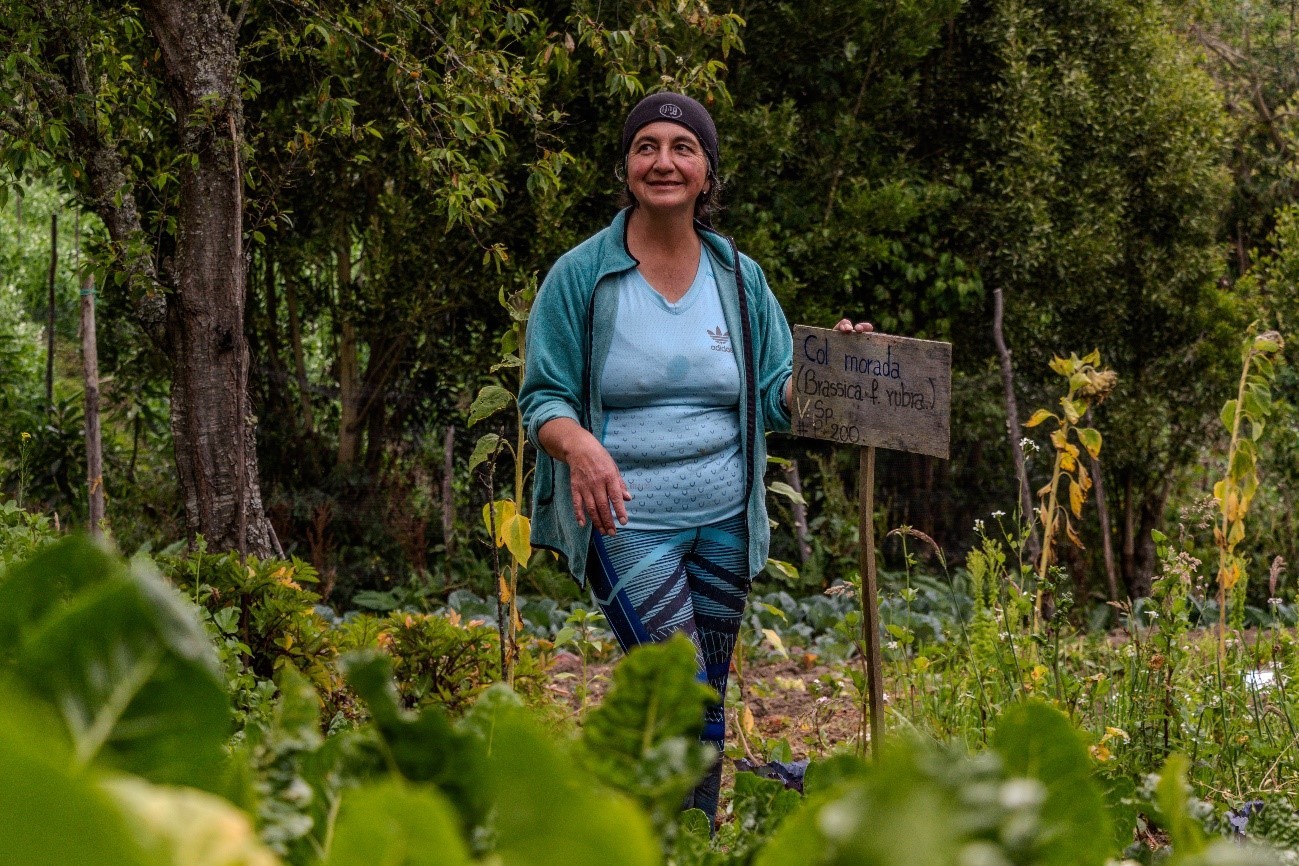
Women like Carmen Moreno (pictured) a local smallholder farmer, cultivate a rich variety of fresh produce, bringing the fruits of their labour into local schools in Carchi. The leadership of Carmen, and others like her, is transforming school meals into a powerful force for growth and change, deeply rooted in the soil of their communities. Partnering with the school meals programme has changed the local smallholder farmers fortunes. Difficulties in securing a ready, stable and rewarding market is a common narrative in many countries, which often dramatically changes when they are connected to school meal programmes, as was the case for Carmen Moreno. After struggling to sell her produce for many years, and in some cases being forced to freely give away her harvest, she finally got a lucky break. Prior to her partnership with the school meals programme, she got 15 cents for a single iceberg lettuce, which the schools are buying at 60 cents per head. “My financial situation has improved a lot. I now have a guaranteed market and after harvesting I immediately supply schools. The pricing is competitive, allowing me to produce and supply more food," she said.
It takes a whole village to raise a healthy, educated child, and the Carchi community has their focus in the right places: schools and farms. Producampo, a group of 30 women and 3 men smallholder farmers, is supplying freshly picked blackberries, glistening with morning dew and packed with many healthy nutrients. Motivated by a 42 percent increase in their monthly income, they have started expanding their production to include other crops, such as spinach and fresh peas. With abundant fresh food and a committed community, the Ecuadorian school meals programme, is on the right track following its launch this year.
The programme is active in five provinces: Carchi, Bolívar, Imbabura, Santa Elena, and Manabí, reaching over 16,000 children. Led by local decentralized governments and supported by seven local smallholder farmers' associations, local businesses, and the World Food Programme, it aims to tackle child malnutrition, which affects 23 percent of children under the age of five in rural provinces like Carchi and 18 percent at the national level. The programme’s support to rural and community development is already taking shape in the five provinces, and this is helping to build more productive, creative, and innovative communities. With the signing of an agreement between the Ecuadorian Government and WFP in June 2024, this partnership aims to expand the programme even further, targeting 35,000 students by 2025.