
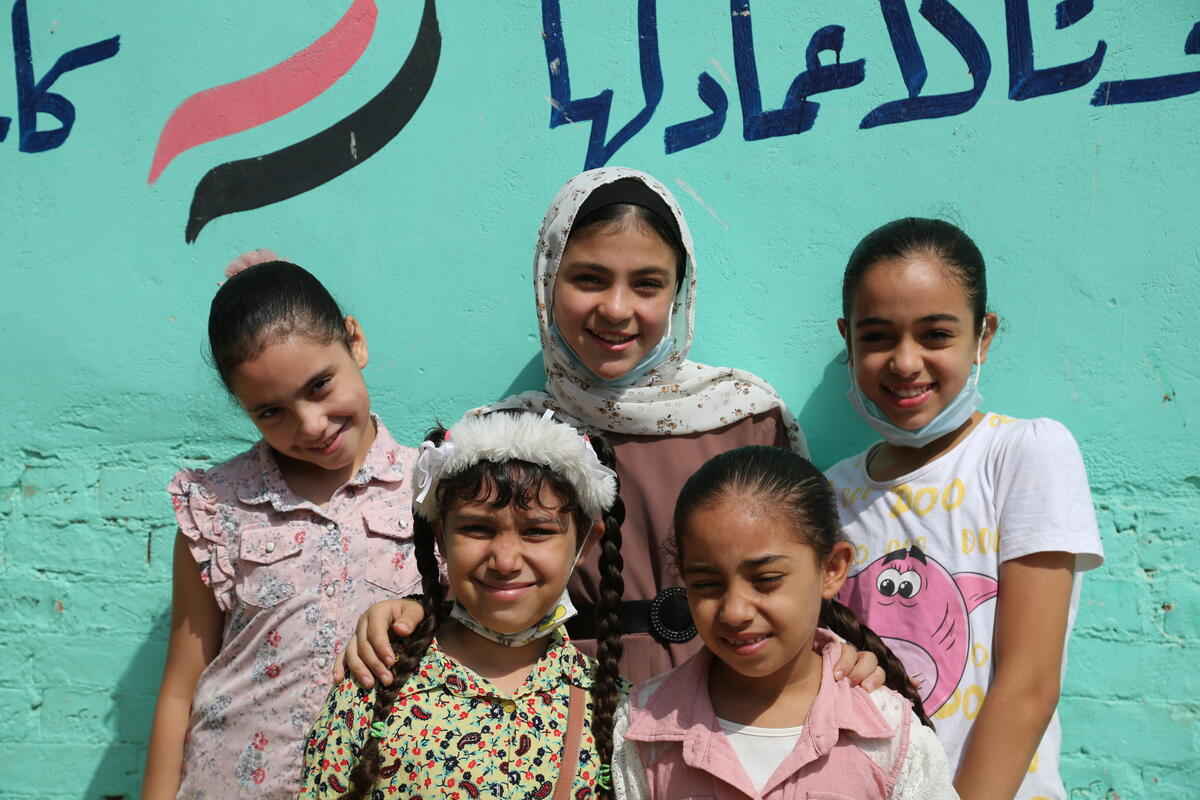
Girls at school in Giza, Egypt Photo credit: © WFP/Omnia Elzahar
In a world grappling with economic uncertainty, rising inflation and growing demands on social safety nets, countries are under pressure to do more with fewer resources. Amid these challenges, debt swap mechanisms are emerging as a bold, innovative solution, transforming financial liabilities into powerful investments in national development. In Egypt, this approach is not just theory – it’s action. By converting external debt into targeted funding for school meal programmes and other social initiatives, Egypt is demonstrating how innovative financing can drive real, lasting impact where it’s needed most.
A debt swap is a smart financial tool in which a country turns part of its foreign debt into local funds to support important development programmes. This not only eases the country’s debt burden but also helps to drive progress in areas like education, health and infrastructure.
Egypt is leading the way in using the debt swap mechanism to fuel national development. By partnering with organizations like the World Food Programme, the government is transforming debt into local investments that improve education, expand and improve the quality of school meals and build resilient food systems. These initiatives empower vulnerable communities and strengthen national capacity. Notable collaborations with countries like Italy and Germany showcase how innovative financing can unite global partners to deliver large-scale, lasting impact.
Egypt’s debt swap initiatives are driving real change, especially in school-based programs, social protection systems, and efforts to economically empower youth and women. In close collaboration with key ministries, such as the Ministry of Planning, Economic Development, and International Cooperation (MoPED), these partnerships are turning financial obligations into strategic investments. The result: stronger school meal programmes, enhanced food security and more inclusive, sustainable development across the country.
Italian Case Study: Empowering Communities through Education and Nutrition
A standout example of Egypt’s debt swap success is its long-standing partnership with the Government of Italy, which started in 2003 and ran through 2022. With an investment of approximately US$22 million, the debt swap initiative supported communities in the governorates of Fayoum, Menia, and Beni Suef, directly benefiting 93,000 students and their families. Children received daily fortified date bars, covering at least 25% of their daily caloric needs to boost focus and energy during classes. Families were given monthly food rations, conditional on their children’s regular school attendance, an incentive that proved especially effective in keeping girls in school. This was an incentive to keep their children in school, particularly among girls to ensure their protection. Over time, the programme expanded its focus to social protection and human capital development in Luxor. It combined school meals with digital education in community schools, promoted youth employability, supported women’s entrepreneurship through micro-loans and skills development, and advanced gender equality and social inclusion.
German Case Study: Catalyzing Rural Development and Resilience
Germany's debt swap partnership with Egypt, launched in 2013 and totaling US$83.3 million across five phases, stands out as a model for sustainable rural development. In collaboration with the World Food Programme, the initiative delivered healthy, locally sourced school meals to thousands of vulnerable children – boosting nutrition and classroom performance. It also upgraded school infrastructure, introduced smart learning tools, and fostered community engagement to enhance education. Beyond schools, the programme piloted and scaled integrated rural development models, advanced food systems and expanded social protection through training, microfinance, and vocational opportunities – particularly for youth. These efforts improved livelihoods, built resilience and enhanced national capacity. Led by Egypt’s Ministry of Planning, Economic Development and International Cooperation, the German-Egyptian debt swap programme also deepened strategic partnerships across the national food system, demonstrating a shared commitment to inclusive, adaptive development.
Strategic Value of Debt Swap Mechanisms
Egypt’s experience demonstrates debt swaps strategic value in advancing national development goals and strengthening international cooperation. Partnerships with Italy and Germany have enabled flexible, responsive use of funds – allowing Egypt to swiftly adapt to evolving socio-economic priorities. These mechanisms have provided a reliable stream of innovative financing, helping sustain critical development initiatives despite fiscal constraints. They have reinforced national ownership and accountability, fostering inclusive, multi-stakeholder partnerships aligned with Egypt’s policy frameworks. Importantly, debt swaps have catalyzed systemic improvements – enhancing education, nutrition and economic empowerment – while promoting localization and long-term resilience.
Looking ahead, Egypt’s debt swap framework is well-positioned to scale further. By integrating digital technologies, expanding education and nutrition programmes, and deepening economic inclusion, these mechanisms can continue to drive inclusive growth through innovation and collaboration.
A call to action for innovative financing
Egypt’s experience with debt swap programmes – anchored in strong partnerships with countries like Italy and Germany – demonstrates the transformative potential of reimagining debt as a catalyst for sustainable development. These initiatives have not only unlocked flexible, predictable funding but have also strengthened national ownership, improved systems and delivered tangible results in education, school meals, nutrition and community resilience. For countries seeking innovative pathways to accelerate progress toward the Sustainable Development Goals, Egypt’s model offers a compelling blueprint. Debt swaps are more than financial instruments – they are strategic enablers of inclusive growth, resilience, and global solidarity. Now is the time for governments, donors and development partners to rethink the role of debt in development. Egypt stands ready to share its experience and expand collaboration with countries willing to turn financial challenges into opportunities for lasting impact.