
Cameroon aims to ensure that one million schoolchildren receive nutritious meals by 2026. This ambitious goal is part of the national school feeding programme to enhance children's growth, development, and academic success.
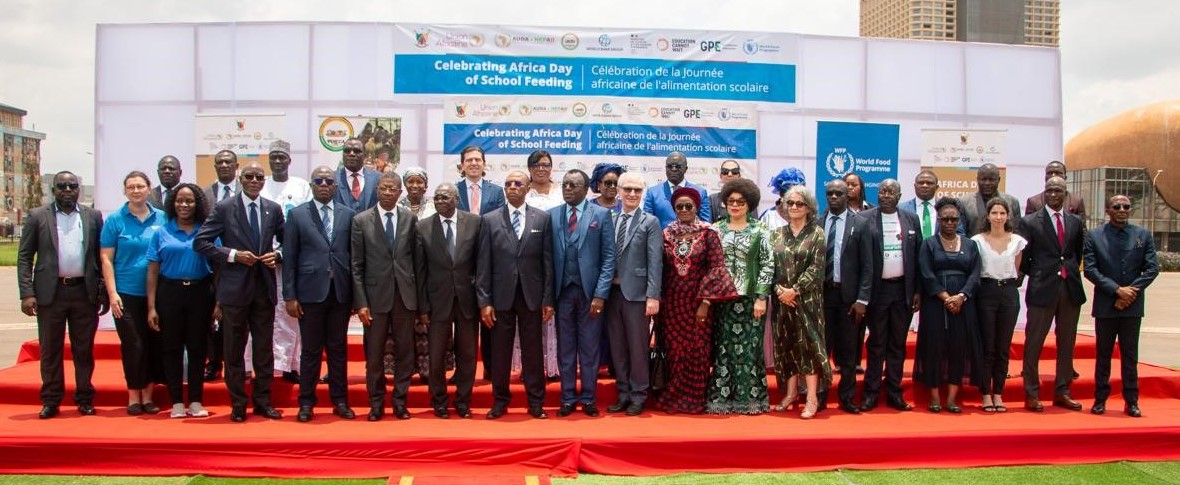
The government of Cameroon celebrated African School Feeding Day this month in Yaoundé, marking a decade of progress. The event saw the participation of the Minister of Basic Education, H.E. Laurent Serge Etoundi Ngoa, and several ministers, a governor, as well as representatives from the French and British embassies, World Bank, Islamic Development Bank, United Nations Agencies, Non-Governmental Organisations and other special guests. Photo credit: WFP/Cameroon
Minister of Basic Education, the Honourable Laurent Serge Etoundi Ngoa, emphasized the ambition to extend school meals to one million children by 2026, highlighting the vital role of nutrition in education and calling for strengthened partnerships. Minister Ngoa underscored the importance of school meals as a key driver for children's development and the nation's future. He stated, "We aim to do more, faster, and better. I extend the state’s profound gratitude to our partners who support us in this endeavor. This collaboration fuels the teamwork that drives our efforts. Over the past eight years, we have seen improvements, with progress accelerating in the last four years. There is evident progress, as our students are increasingly better nourished."
The government is partnering with organizations such as the World Food Programme (WFP) and Nascent Solutions to make their commitment to universal school meals a reality. Honourable Ngoa stressed the importance of developing effective supply chain strategies, with particular emphasis on strengthening the capacities of small producers. "They are the ones who will enable us to reach schools located in remote areas,” he stated.
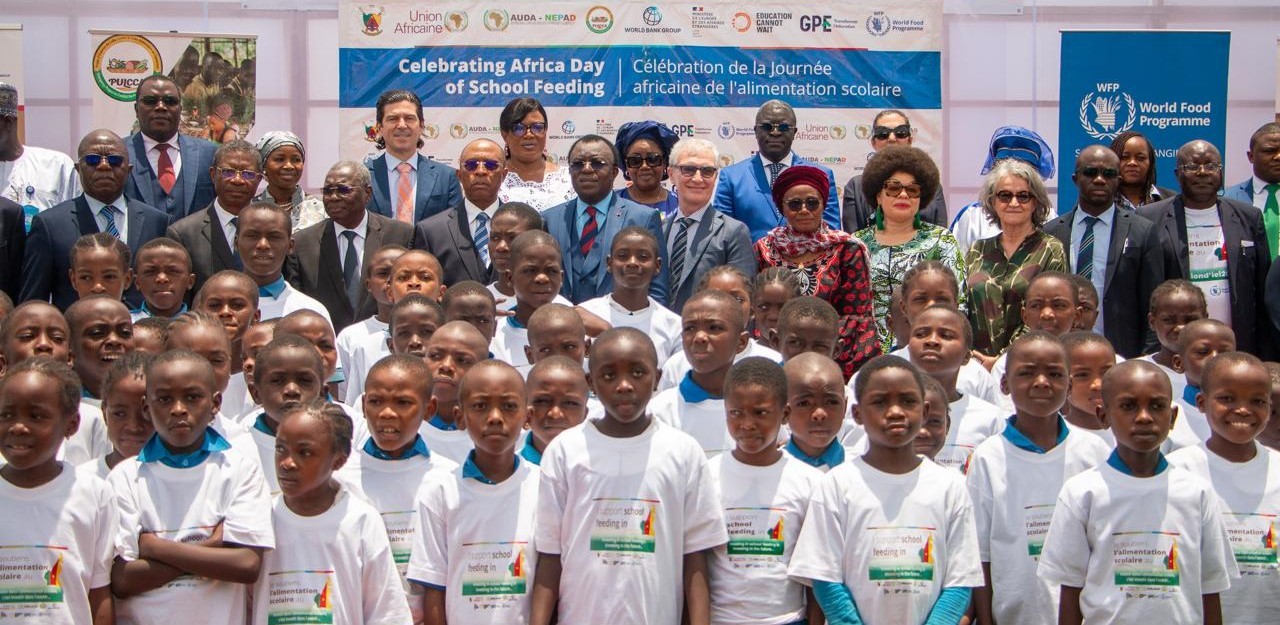
Participants at the Africa Day of School Feeding commemoration including school children who expressed gratitude for efforts by the government and partners in advancing school meals in Cameroon. Photo credit: WFP/Cameroon
The Government of Cameroon recognizes that school meals are crucial for educational success, and that well-nourished children are more focused and likely to excel academically. The programme also encourages school enrollment and retention by relieving families of midday meal costs, saving them about 10% of their income.
Emphasizing the critical role of school meals, the UN Resident Coordinator, Dr. Issa Sanogo underscored that the National Development Strategy (2020-2030) identifies an educated society as a cornerstone for human capital development. He highlighted the crucial role of school meals in driving growth and development of children. Dr. Sanogo further commended the Government of Cameroon for its unwavering commitment to investing in the nation’s future. Dr. Sanogo reminded everyone that as Cameroon enters the penultimate year of the United Nations Sustainable Development Cooperation Framework, “we stand at a pivotal moment”. This framework, which guides planning and implementation between the government and the UN system, aims to realize the vision of a prosperous Cameroon. Dr. Sanogo emphasized this is an opportune time to reflect on collective successes, address challenges and explore prospects.
The World Food Programme Country Director, Gianluca Ferrera, echoed similar sentiments, stressing the benefits of school meals are well researched and backed with evidence. He noted that well-nourished students are more likely to attend school regularly, actively participate in class activities and perform better academically. He highlighted how WFP is collaborating with the Ministry of Basic Education to finalise and validate the National School Feeding Strategy, alongside a Sustainable Financing Initiative supported by the School Meals Coalition. These strategic engagements, he said, have garnered support from several donors, including the World Bank, Islamic Development Bank and Global Partnership for Education, all led by the Government of Cameroon to expand coverage and ensure no child is left behind.
Despite the progress made in Cameroon, challenges persist. To ensure every child has access to quality school meals, unwavering commitment, increased resources and robust stakeholder collaboration are essential. Together, Cameroon can overcome these obstacles and ensure a brighter future for all children.
Read the full article in French.