
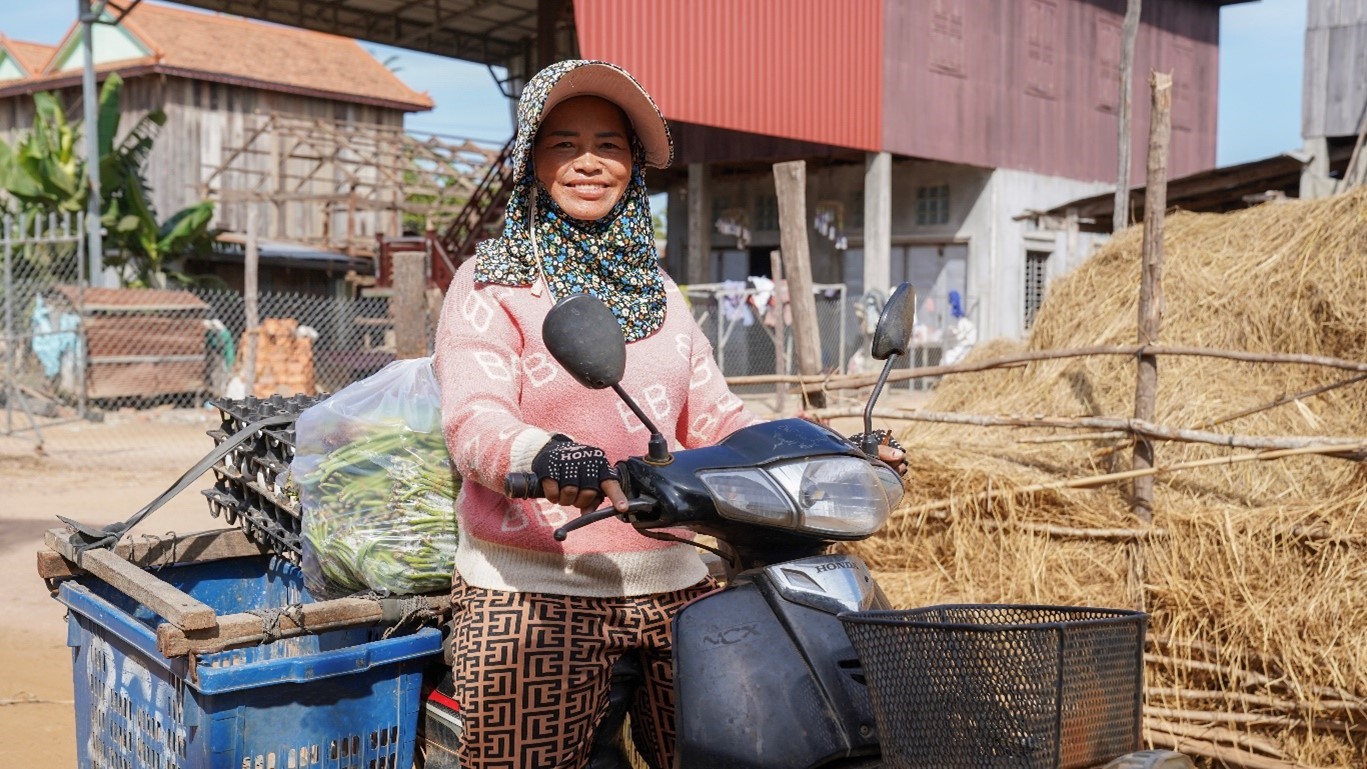
Soe Sem happily delivers the vegetables and meat to one of the schools she supplies food using her motorcycle. Photo Credit: WFP/Darapech Chea
By Ahneseu Seo and Darapech Chea in Cambodia
The future looks promising for Soe Sem, a dynamic smallholder farmer and businesswoman from Kampong Thom Province in Cambodia. Over the past two years, she has tirelessly worked every month to supply 450 kg of vegetables, 300 eggs, 80 kg of meat, and 100kg of fish to four schools in Banteay Chas commune in her province where she lives with her mother, husband, and two children.
Soe Sem’s dedication and entrepreneurial spirit contribute to efforts to strengthen the provision of nutritious school meals, paving the way for a healthier and more nourished generation of students. Since joining the Home-Grown School Feeding programme – a partnership of the Government of Cambodia and the World Food Programme, which supplies food in the most disadvantaged areas – Soe Sem has been generating a decent income for her family. The initiative to buy local food has changed her life. She did not have a bank account for years, but now she proudly receives her monthly payments directly into her account, thanks to the programme, which has motivated her to manage her finances better. Soe Sem also uses the financial management skills she has gained through the initiative to track her budget and improve her business efficiency.
Women farmers and small business entrepreneurs like Soe Sem are key partners in Cambodia’s school meals programme, which strives to deliver locally sourced, fresh foods to schools. By supporting local farmers and businesses, the programme is economically empowering women, boosting the local economy, and enhancing systems for local procurement. This partnership with local farmers also facilitates a crucial shift away from reliance on food imports.
The programme works with 750 smallholder farmers to improve their agricultural techniques, increase productivity, and improve post-harvest management. It also aims to create strong linkages between the school meals programme and various sectors such as food processing and fortification enterprises. Furthermore, the initiative has developed capacities of six officers from three provincial departments of agriculture in Kampong Thom, Kampong Chhnange, and Siem Reap, as well as 14 officers from the seven agriculture district offices. This effort is designed to strengthen support for the Home-Grown School Feeding supply chains, ensuring seamless and efficient delivery of nutritious, locally sourced foods to schools.
In Banteay Chas commune, Soe Sem acknowledges that supplying food to schools has been difficult as she often had to travel long distances to buy other foods not available in her community. “But I like the challenge because the work has made me and the rest of my community realize that we need to work with our local authority to develop our farming, markets, and road infrastructure," says Soe Sem. To ease trips to markets such as Kampong Thmar, which is kilometres away, Soe Sem and her husband Hout innovated their motorcycle by installing two baskets.
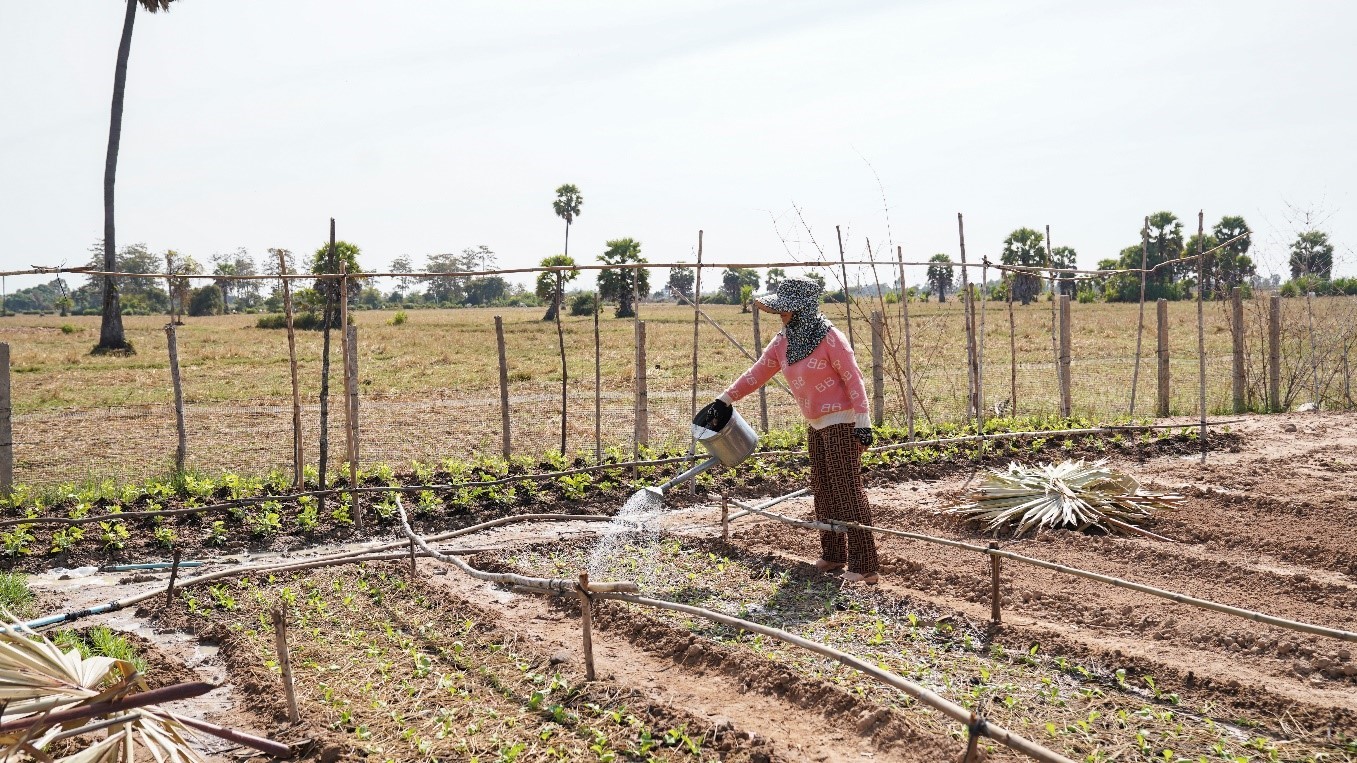
Soe Sem’s hard work is paying off as she spends many hours tending to her vegetable garden, supplying fresh produce to local schools. Photo Credit: WFP/Dapech Chea
Despite long work hours, Soe Sem’s passion for school meals drives her to overcome challenges. She has witnessed firsthand, from her two children, how school meals are promoting their health and enhancing academic performance. “I will be happy to see all the children in my community and country eating nutritious food. This can help them do better in their classes,” says Soe Sem. Many of her community also recognise the benefits of supporting the initiative to provide local food in schools, inspiring them to rally behind the home-grown school feeding programme and fostering a collective effort towards a healthier future. Recently, the local community collaborated to extend a gravel road to the end of the village. This improvement has made it easier for farmers to collect their produce from their plots and transport it for sale.
Soe Sem explains that supplies will improve as more people become aware of the economic opportunities created by school meals. “That will ease the burden of travelling too far to source food and ensure timely school deliveries.”
The inspiring story of Soe Sem has attracted many women farmers who visit to learn from her experiences. As a member of the School Meals Coalition, the Cambodian government has indicated the urgent need for new partnerships to help extend collaboration with other smallholder farmers and enterprises in other provinces in need of support.